


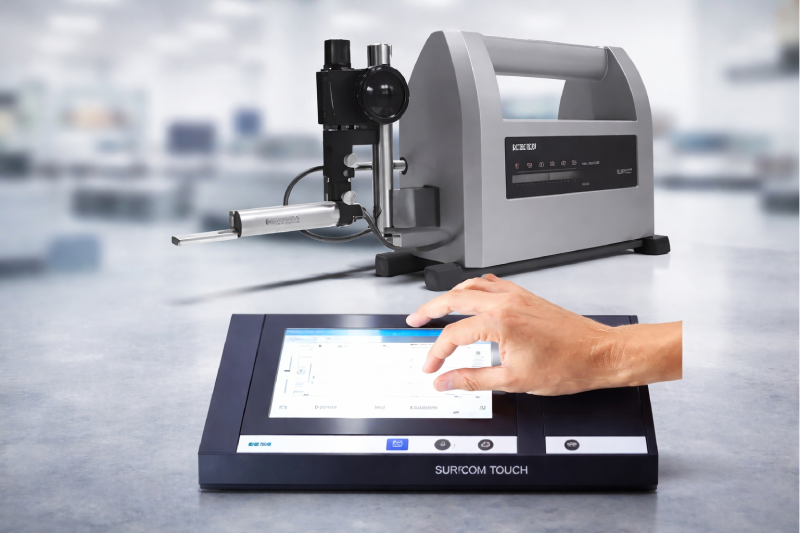
In modern manufacturing and quality control, surface roughness measurement plays a critical role in ensuring product performance, durability, and compliance with international standards. From automotive components to aerospace parts and precision machining, even minor surface irregularities can affect friction, wear, sealing ability, and overall functionality. Choosing the right surface roughness tester is therefore essential for achieving accurate, repeatable, and reliable results.
This guide explains how to select the most suitable surface roughness tester for your industrial needs, helping you make an informed investment that improves measurement accuracy and production efficiency.
Why Surface Roughness Measurement Is Important?
Surface roughness refers to the fine irregularities present on a material’s surface after manufacturing processes such as milling, grinding, turning, or polishing. Accurate surface roughness measurement ensures:
- Proper fit and assembly of components
- Reduced friction and wear
- Improved coating adhesion
- Compliance with ISO, ANSI, or JIS standards
- Enhanced product quality and lifespan
Without a reliable ra tester, manufacturers risk defects, rejected batches, and costly rework.
Understand Your Measurement Requirements
Before selecting a surface roughness tester, it is important to clearly define your application requirements. Consider the type of materials you measure, the surface geometry, and the roughness parameters you need to evaluate.
Most industries rely on Ra (arithmetical mean roughness), making an accurate ra tester essential. However, some applications may also require parameters such as Rz, Rq, or Rt. Ensure the surface roughness tester you choose supports all required parameters for your process.
Choose Between Portable and Benchtop Surface Roughness Testers
One of the first decisions involves selecting the right form factor.
Portable Surface Roughness Tester
Portable testers are compact, lightweight, and ideal for on-site surface roughness measurement. They are commonly used for in-process inspection, shop floor checks, and field applications. A handheld ra tester offers flexibility and quick results without moving large components.
Benchtop Surface Roughness Tester
Benchtop systems are designed for laboratory environments where maximum accuracy and advanced analysis are required. These surface roughness testers are ideal for R&D, calibration labs, and detailed surface profiling.
Choosing between portable and benchtop models depends on whether mobility or high-precision analysis is more important for your workflow.
Contact vs Non-Contact Surface Roughness Measurement
Another critical factor is the measurement method.
Contact Surface Roughness Tester
Contact-based surface roughness testers use a stylus that physically traces the surface. These are widely used due to their accuracy, reliability, and suitability for most industrial surfaces. A contact ra tester is often the preferred choice for metal components and machined parts.
Non-Contact Surface Roughness Measurement
Non-contact systems use optical or laser technology and are ideal for soft, delicate, or highly polished surfaces. While they eliminate the risk of surface damage, they are typically more expensive and sensitive to environmental conditions.
Accuracy, Resolution, and Measurement Range
Accuracy is the most important factor when selecting a surface roughness tester. Look for instruments with high resolution and a measurement range suitable for both rough and fine surfaces. A reliable ra tester should provide consistent readings even under varying conditions.
Additionally, consider repeatability and compliance with international standards. Certified surface roughness testers ensure traceable and trustworthy surface roughness measurement results.
Compliance with International Standards
Industries often require adherence to standards such as ISO 4287, ISO 4288, ANSI B46.1, or JIS specifications. Ensure your surface roughness tester supports these standards and allows easy switching between them.
A standards-compliant ra tester simplifies audits, customer approvals, and global manufacturing requirements.
Ease of Use and User Interface
A surface roughness tester should be intuitive and easy to operate. Features such as a clear display, simple menu navigation, and quick setup reduce operator errors and training time.
Modern surface roughness testers often include touchscreen displays, preset measurement modes, and automatic parameter selection, making surface roughness measurement faster and more efficient.
Data Output, Storage, and Connectivity
Data management is an essential part of quality control. Choose a surface roughness tester that supports data storage, USB or Bluetooth connectivity, and PC software integration. This allows easy data transfer, report generation, and long-term traceability.
Advanced ra testers also support printer connections for instant measurement reports on the shop floor.
Durability and Environmental Conditions
Industrial environments can be harsh. A robust surface roughness tester should withstand vibration, dust, and temperature variations. Portable models should have strong housings and long battery life to support continuous surface roughness measurement during production shifts.
Long-Term Value and Support
Finally, consider calibration support, warranty, and technical service. A high-quality surface roughness tester is a long-term investment. Reliable after-sales support ensures consistent accuracy and extended instrument life.
Selecting the right surface roughness tester is essential for achieving accurate, repeatable, and standard-compliant surface roughness measurement. By understanding your application needs, choosing the right measurement method, ensuring accuracy and standards compliance, and investing in a reliable ra tester, you can significantly improve product quality and manufacturing efficiency.
Whether for shop floor inspections or laboratory analysis, the right surface roughness tester empowers industries to maintain precision, reduce defects, and meet demanding quality expectations.