


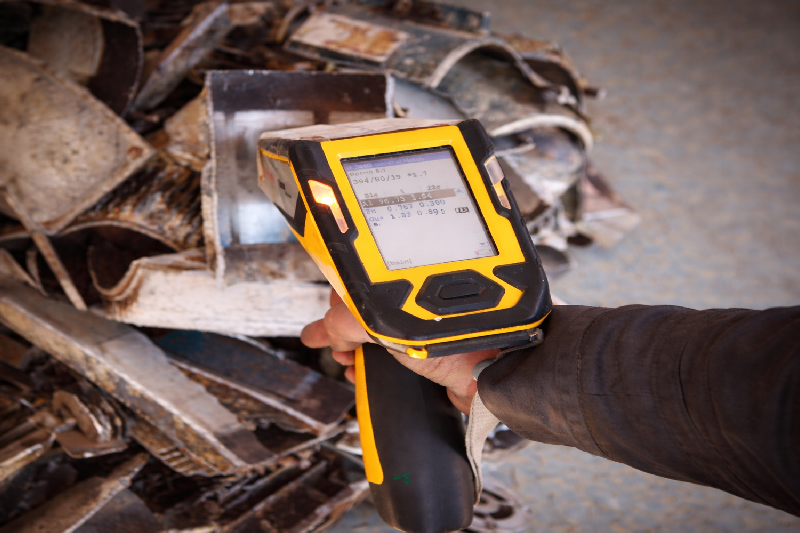
In today’s highly competitive Indian industrial environment, controlling costs while maintaining quality has become a top priority. Industries such as manufacturing, metal processing, automotive components, electronics, jewellery, and recycling face constant pressure to deliver accurate results faster and at lower operational costs. This is where handheld XRF analyzers have emerged as a powerful solution.
Using x ray fluorescence spectroscopy, handheld XRF devices allow businesses to perform instant, non-destructive material analysis directly at the shop floor or site location. Instead of depending on time-consuming laboratory testing, Indian businesses can now rely on x ray fluorescence analysis XRF to make faster, smarter decisions. These portable tools are transforming how industries approach quality control, compliance, and cost management.
Let’s explore three practical ways handheld XRF technology helps Indian businesses save money, improve efficiency, and strengthen operational control.
1. Slashing External Testing Costs with On-Site Material Analysis
Many Indian companies traditionally rely on third-party laboratories for material identification and quality verification. Industries such as automotive components, jewellery, steel fabrication, and electronics often send samples to external labs to confirm alloy composition or elemental content. While accurate, this approach comes with high testing fees, transportation costs, and long turnaround times.
This is where handheld XRF analyzers deliver immediate value.
With on-site x ray fluorescence analysis XRF, businesses can instantly determine elemental composition and material grades without sending samples outside the facility. Results are available in seconds, enabling teams to take immediate action. Over time, eliminating frequent lab testing can reduce annual quality control costs significantly.
Imagine a metal components manufacturer in Pune or Ahmedabad that tests hundreds of parts every week. Instead of waiting days for lab reports, technicians can use a handheld XRF device to verify materials instantly before production or dispatch. This not only reduces testing expenses but also prevents production delays.
Key Benefits of On-Site XRF Testing
- Eliminates recurring lab outsourcing costs
- Provides real-time material verification
- Reduces production downtime
- Improves inventory and process flow
By bringing x ray fluorescence spectroscopy in-house, Indian businesses gain faster insights while cutting unnecessary expenses.
2. Meeting Customer and Compliance Requirements Without Hurting Profit Margins
Across Indian industries, customer specifications and regulatory standards are becoming stricter. Sectors such as aerospace, defence manufacturing, infrastructure, jewellery certification, and export-oriented manufacturing require accurate material traceability and documented proof of compliance.
Traditionally, many companies have relied on external inspection agencies or consultants to meet these requirements—often at a high cost.
Handheld XRF technology simplifies this process. By using x ray fluorescence spectroscopy directly in quality control and inspection workflows, businesses can perform positive material identification (PMI) on-site. This allows manufacturers to verify that incoming raw materials, in-process components, and finished goods meet the required specifications before shipment.
Instead of spending lakhs of rupees annually on outsourced inspections, companies can conduct material verification internally using handheld XRF analyzers. This not only reduces compliance costs but also strengthens customer confidence.
In India’s export-driven sectors, where even minor material discrepancies can lead to rejected shipments or penalties, real-time x ray fluorescence analysis XRF becomes a major competitive advantage.
How Handheld XRF Supports Compliance
- Instant positive material identification (PMI)
- Ensures adherence to global quality standards
- Reduces risk of material mix-ups
- Supports audit and traceability documentation
With handheld XRF tools in place, Indian manufacturers can meet customer and regulatory demands efficiently—without sacrificing profit margins.
3. Reducing Rework, Scrap, and Production Waste
One of the biggest hidden costs in manufacturing is rework and scrap. Errors in raw materials, incorrect alloy usage, or coating inconsistencies often go unnoticed until final inspection. By that stage, the cost of correction is high—resulting in wasted materials, additional labor, and lost time.
Handheld XRF analyzers help prevent these losses through early-stage quality checks.
Using x ray fluorescence analysis XRF, manufacturers can verify materials at multiple points during production. For example, an appliance or electrical equipment manufacturer can use handheld XRF to measure coating thickness or confirm alloy composition before parts move to the next stage. Any deviation is detected immediately, preventing defective parts from progressing further.
Early detection significantly reduces scrap rates and minimizes the need for rework. In high-volume Indian manufacturing environments, even small reductions in waste translate into substantial cost savings over time.
Top Savings from Early Quality Control
- Lower scrap and rejection rates
- Reduced rework and labor costs
- Improved production efficiency
- Stronger brand and customer trust
By integrating handheld XRF analyzers into routine quality inspections, companies protect their bottom line while maintaining consistent product quality.
Beyond Cost Savings: Practical Advantages That Drive ROI
While cost reduction is a major benefit, the practical features of handheld XRF technology further enhance its return on investment:
- Portable and rugged design suitable for factory floors and field use
- Fast, non-destructive testing with no damage to samples
- Easy data storage and reporting for audits and compliance
- Minimal operator training required
For Indian steel plants, fabrication units, recycling facilities, and manufacturing hubs, these advantages make handheld XRF an efficient, long-term investment.
For Indian businesses, adopting handheld XRF analyzers powered by x ray fluorescence spectroscopy is more than just a technology upgrade—it’s a strategic cost-saving decision. By reducing dependence on external labs, simplifying compliance, and preventing rework and waste, x ray fluorescence analysis XRF helps businesses operate more efficiently and competitively.
As Indian industries continue to focus on quality, sustainability, and profitability, handheld XRF technology is becoming an essential tool for smarter decision-making and long-term ROI. If your business hasn’t yet explored handheld XRF solutions, now is the right time to understand how they can deliver measurable savings and operational excellence.