


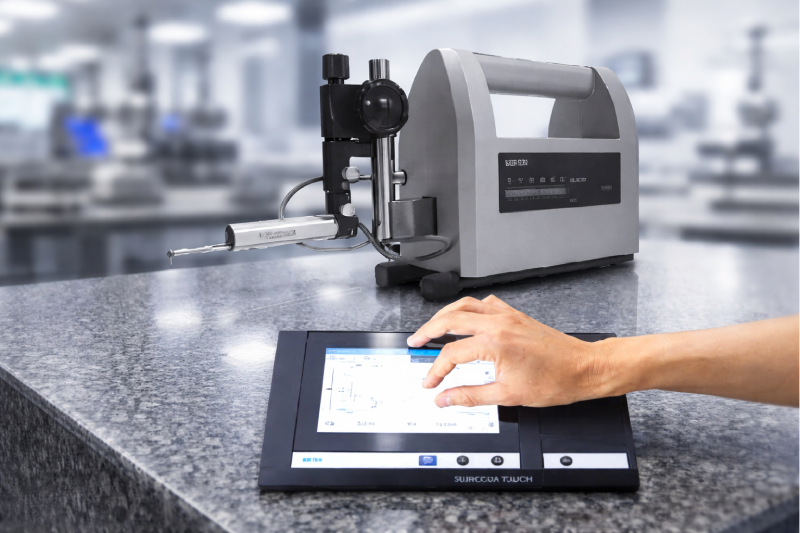
In modern manufacturing, even the smallest surface imperfections can affect performance, durability, and product quality. From automotive components and aerospace parts to medical devices and precision tools, surface finish plays a critical role. This is where a surface roughness tester becomes essential. But how exactly does it work, and why is it so important in quality control?
What Is Surface Roughness?
Surface roughness refers to the fine irregularities present on a material’s surface after machining, grinding, polishing, or coating processes. These irregularities are often too small to see with the naked eye, but can significantly impact:
- Friction and wear
- Sealing performance
- Fatigue life
- Coating adhesion
- Overall product reliability
What Is a Surface Roughness Tester?
A surface roughness tester is a precision measuring instrument designed to quantify surface texture. It evaluates microscopic peaks and valleys on a surface and converts them into numerical values that represent surface quality.
Most commonly used in manufacturing and inspection environments, these instruments help engineers and quality teams verify whether a surface finish meets specified tolerances.
How Does a Surface Roughness Tester Work?
- Contact with the Surface (Stylus Movement)
In a traditional contact-type surface roughness tester, a diamond-tipped stylus gently moves across the test surface at a controlled speed. As the stylus travels, it follows the microscopic highs and lows of the surface texture. The vertical movement of the stylus is extremely small, often measured in microns, but it accurately reflects the true surface profile. - Signal Conversion and Amplification
As the stylus moves over peaks and valleys, its vertical displacement is converted into an electrical signal. This signal is then amplified and processed by the tester’s internal electronics. This conversion is the foundation of reliable surface roughness measurement, as it ensures precision even on ultra-fine surfaces. - Filtering and Evaluation Length
To eliminate unwanted waviness or form errors, the surface roughness tester applies filters. These filters focus only on roughness characteristics relevant to functional performance. The tester also measures over a defined evaluation length, ensuring consistent and repeatable results. This step is critical for accurate roughness analysis. - Calculation of Roughness Parameters
Once the data is processed, the tester calculates surface roughness parameters. The most commonly used parameter is Ra, which represents the average roughness of the surface. A Ra-tester specifically focuses on measuring this widely accepted value, making it ideal for routine inspections and production environments.
What Is Ra and Why Is It Important?
Ra (Arithmetic Average Roughness) is the average deviation of the surface profile from the mean line over a specified length. It is:
- Easy to understand
- Widely specified in engineering drawings
- Accepted across industries
Types of Surface Roughness Testers
Contact Surface Roughness Tester
- Uses a stylus to trace the surface
- Highly accurate and widely used
- Ideal for metal and machined components
Non-Contact Surface Roughness Tester
- Uses optical or laser-based technology
- No physical contact with the surface
- Suitable for soft, delicate, or highly polished surfaces
Both types play a vital role in industrial surface roughness measurement, depending on application needs.
Where Are Surface Roughness Testers Used?
A surface roughness tester is essential in industries where precision and consistency matter, including:
- Automotive manufacturing
- Aerospace engineering
- Medical device production
- Tool and die manufacturing
- Precision machining and metalworking
In each of these sectors, accurate surface roughness measurement helps reduce defects, improve performance, and ensure compliance with international standards.
Benefits of Using a Surface Roughness Tester
Using a reliable surface roughness tester offers several advantages:
- Ensures consistent product quality
- Reduces wear and friction-related failures
- Improves process control
- Minimizes rework and scrap
- Enhances customer confidence
A Ra tester, in particular, simplifies quality checks by providing fast and repeatable results during production.
Choosing the Right Surface Roughness Tester
When selecting a surface roughness tester, consider:
- Required roughness parameters (Ra only or multiple)
- Measurement range and accuracy
- Portability vs bench-top systems
- Contact or non-contact measurement needs
- Ease of use and data reporting
The right instrument ensures dependable surface roughness measurement and long-term process efficiency.
Understanding how a surface roughness tester works is crucial for manufacturers focused on quality, performance, and precision. By tracing the surface profile, converting movement into electrical signals, and calculating key parameters like Ra, these instruments provide valuable insights into surface condition.
Whether you rely on a basic Ra tester or an advanced surface roughness measurement system, accurate surface analysis helps maintain standards, optimize processes, and deliver reliable products in today’s competitive manufacturing landscape.