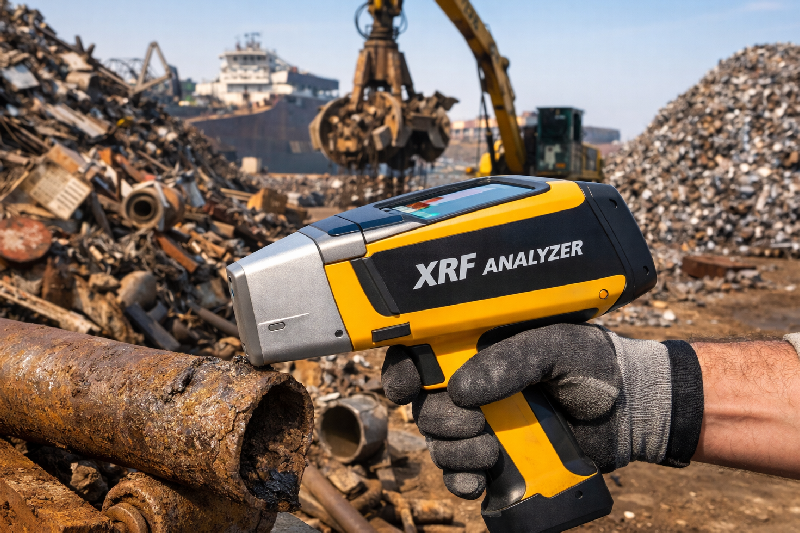
India’s scrap metal recycling industry is growing rapidly due to increasing demand for raw materials in manufacturing, construction, and infrastructure development. Scrap metal dealers, recycling companies, and metal processors must handle large volumes of different metals every day. One of the biggest challenges they face is identifying and sorting various metals quickly and accurately.
Handheld XRF analyzers are portable devices designed to analyze the chemical composition of metals and alloys. They operate using x ray fluorescence spectroscopy, a scientific method that detects elements present in a material by measuring the fluorescent X-rays emitted when the material is exposed to a primary X-ray source.
With x ray fluorescence analysis XRF, scrap metal dealers can identify metals such as stainless steel, copper, aluminum, nickel alloys, and many other materials within seconds. Unlike traditional laboratory testing methods, handheld devices provide immediate results on-site, making them ideal for fast-paced scrap recycling operations.
For businesses dealing with large volumes of metal scrap, these analyzers have significantly improved the accuracy of metal identification and pricing.
Another major advantage is speed. A handheld XRF analyzer can provide accurate results in just a few seconds, allowing workers to sort large quantities of scrap metal efficiently.
One of the largest scrap metal hubs in India is Alang in Gujarat, home to the world-famous shipbreaking yard. Hundreds of ships are dismantled here every year, generating massive quantities of metal scrap including steel plates, pipes, machinery parts, and alloys.
Using x ray fluorescence analysis XRF, scrap traders in Alang can separate valuable alloys from regular steel, ensuring better pricing and efficient recycling operations. The technology has become an important tool for improving transparency and reducing losses in shipbreaking activities.
Mumbai is one of India’s largest commercial centers and a major hub for scrap metal trading. Many recycling companies and metal traders in the city deal with imported scrap and industrial waste metals.
Because different metals often look similar, visual inspection alone is not reliable. This is why handheld XRF analyzers are widely used by scrap traders in Mumbai. With x ray fluorescence spectroscopy, they can instantly identify alloy grades and ensure the material meets required specifications.
Through x ray fluorescence analysis XRF, traders can determine the exact metal composition before finalizing deals. This helps prevent disputes between buyers and sellers while ensuring fair market pricing.
Delhi and the surrounding NCR region host a large number of manufacturing units, which generate significant volumes of industrial metal scrap. Recycling companies operating in Delhi handle materials such as stainless steel scrap, aluminum parts, and electronic waste.
To manage these materials efficiently, many scrap businesses rely on handheld XRF analyzers. Using x ray fluorescence spectroscopy, recyclers can detect the presence of elements such as chromium, nickel, and molybdenum in alloy metals.
With x ray fluorescence analysis XRF, scrap yards in Delhi can quickly separate high-value alloys from ordinary metals. This improves the quality of recycled materials and supports sustainable industrial practices.
Moradabad is widely known as the “Brass City of India.” The city has a large metal handicraft and recycling industry where brass, copper, and other alloys are processed.
For businesses in Moradabad, accurate alloy identification is critical because even small variations in metal composition can affect product quality. Handheld XRF analyzers provide quick and reliable testing through x ray fluorescence spectroscopy.
Ludhiana is a major engineering and manufacturing hub in northern India. The city produces a wide range of products including machinery parts, auto components, and industrial tools.
Large amounts of metal scrap are generated during manufacturing processes, creating strong demand for recycling solutions. Scrap dealers and recyclers in Ludhiana use handheld XRF analyzers to quickly test and classify metal waste.
With the help of x ray fluorescence spectroscopy, businesses can identify alloy grades and separate recyclable metals efficiently. Through x ray fluorescence analysis XRF, recycling companies ensure that high-value alloys are recovered and reused effectively.
As India continues to expand its manufacturing sector, the demand for recycled metals will continue to rise. Modern technologies like handheld XRF analyzers are playing a crucial role in improving the efficiency and transparency of the recycling industry.
By using x ray fluorescence spectroscopy and advanced x ray fluorescence analysis XRF, scrap metal businesses can identify materials faster, reduce losses, and ensure accurate pricing. These benefits make handheld XRF technology an essential tool for modern recycling operations.
For scrap dealers, recycling companies, and metal traders across India, adopting handheld XRF analyzers is not just a technological upgrade—it is a strategic investment that supports smarter, more profitable scrap metal recycling.