


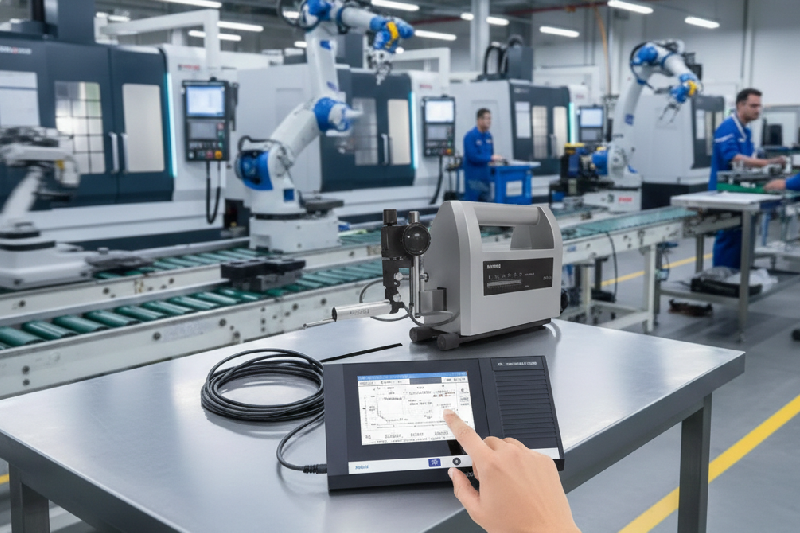
India’s manufacturing sector is growing rapidly under initiatives like Make in India, increasing exports, and rising global quality expectations. From automotive hubs in Pune and Chennai to precision engineering clusters in Coimbatore and Rajkot, manufacturers are competing not just on price but on quality. In this competitive environment, surface finish has become a critical quality parameter — and this is where a surface roughness tester plays a vital role.
Surface finish is not just about how a product looks. It directly impacts performance, durability, friction, coating adhesion, and product life. Whether you are producing automotive components, industrial machinery parts, aerospace components, molds, dies, or medical instruments, accurate surface measurement is essential. Investing in the right surface roughness measuring instruments ensures that your production meets both Indian and international standards.
What is Surface Roughness and Why Does It Matter?
Surface roughness refers to the small, finely spaced deviations on a material’s surface. Even a part that appears smooth to the naked eye may have microscopic peaks and valleys. These irregularities affect –
- Friction between moving parts
- Wear and tear
- Lubrication retention
- Fatigue strength
- Coating and plating adhesion
In industries such as automotive manufacturing, poor surface finish can lead to engine failure, increased fuel consumption, and higher maintenance costs. In heavy machinery manufacturing, improper surface texture may cause premature component breakdown. That is why every modern factory needs reliable surface roughness measurement equipment to maintain strict quality control.
Growing Demand for Precision in Indian Manufacturing
Indian manufacturers are now exporting to Europe, the USA, and the Middle East. Global buyers demand adherence to ISO, ASTM, and DIN standards. Surface finish parameters like Ra, Rz, and Rt are frequently specified in engineering drawings. Without a dependable ra tester, manufacturers risk rejection of shipments and loss of credibility.
A surface roughness tester helps Indian businesses maintain consistent quality across production batches. It ensures compliance with customer specifications and avoids costly rework. For MSMEs and large-scale manufacturers alike, adopting advanced surface roughness measuring instruments is no longer optional — it is a necessity.
How a Surface Roughness Tester Improves Product Quality?
- Ensures Dimensional Accuracy
CNC machining and grinding processes require high precision. A surface roughness tester verifies that the finished component meets the desired surface profile. - Reduces Rejection Rates
Many Indian factories struggle with rejection due to inconsistent finishing. Using proper surface roughness measurement equipment during in-process inspection reduces scrap and rework. - Improves Product Performance
In automotive components such as crankshafts and gears, the correct Ra value is crucial. A reliable ra tester ensures optimal performance and longer service life. - Enhances Coating and Plating Quality
Powder coating, painting, and electroplating require specific surface textures for strong adhesion. A surface roughness tester helps achieve the right surface preparation. - Boosts Brand Reputation
Consistent quality builds trust. When manufacturers use professional surface roughness measuring instruments, they demonstrate commitment to precision and reliability.
Cost Savings Through Surface Roughness Measurement
Many business owners see testing equipment as an expense. In reality, investing in a high-quality surface roughness tester saves money in the long run.
- Reduced product returns
- Lower material wastage
- Minimized machine downtime
- Improved customer satisfaction
- Faster quality approvals
For Indian SMEs working on tight margins, controlling surface finish with accurate surface roughness measurement equipment can significantly improve profitability.
Applications Across Indian Industries
Surface roughness testing is widely used in –
- Automotive component manufacturing
- Tool and die making
- Metal fabrication
- Aerospace component production
- Railways and heavy engineering
- Pump and valve manufacturing
- Medical device production
In all these sectors, a dependable ra tester ensures compliance with strict engineering specifications. Modern surface roughness measuring instruments are portable, easy to operate, and suitable for shop-floor environments.
Portable vs. Bench-Top Surface Roughness Testers
Indian manufacturers can choose between portable and laboratory-grade models. A portable surface roughness tester is ideal for on-site inspection and large components. Bench-top surface roughness measurement equipment is suitable for detailed analysis and R&D labs.
Selecting the right surface roughness measuring instruments depends on –
- Type of components
- Required measurement parameters
- Production volume
- Industry standards
- Budget considerations
Consulting with experienced suppliers ensures that your investment in a ra tester delivers maximum value.
Surface Roughness Testing and Industry 4.0
As Indian factories adopt automation and smart manufacturing, integrating digital surface roughness measurement equipment with data systems improves traceability. Modern surface roughness testers offer digital displays, data storage, USB connectivity, and statistical analysis features.
By integrating a surface roughness tester into quality management systems, manufacturers can –
- Maintain digital inspection records
- Analyze trends in machining performance
- Improve process control
- Meet audit requirements
This level of control gives Indian businesses a competitive edge in global markets.
Why Now is the Right Time to Invest?
With rising competition and increasing export opportunities, quality can no longer be compromised. Buyers are becoming stricter, and quality audits are more frequent. A professional surface roughness tester ensures your products consistently meet technical drawings and customer expectations.
Indian manufacturers who adopt advanced surface roughness measuring instruments and reliable surface roughness measurement equipment position themselves as quality-focused and future-ready enterprises. A high-performance ra tester is not just a testing device — it is a strategic tool for growth.
Surface finish plays a crucial role in product performance, safety, and durability. In today’s competitive manufacturing landscape, especially in India, maintaining precise surface quality is essential. A dependable surface roughness tester helps reduce rejection rates, improve product life, and enhance customer trust.
Whether you run a small machining unit or a large manufacturing plant, investing in advanced surface roughness measuring instruments and reliable surface roughness measurement equipment ensures long-term business success. A quality ra tester is not an expense — it is a smart investment in precision, performance, and profitability.