

Automotive

Medical Device & Pharmaceutical

Aerospace

Electronic & Electric Component

Chemicals & Petrochemicals

Metal Foundries & Casting

Energy, Power & Renewables




XRD analysis provides high-performance results in a wide range of industrial and research applications including academic research, chemicals, pharmaceuticals, polymers, semiconductors, thin films, metals and minerals.
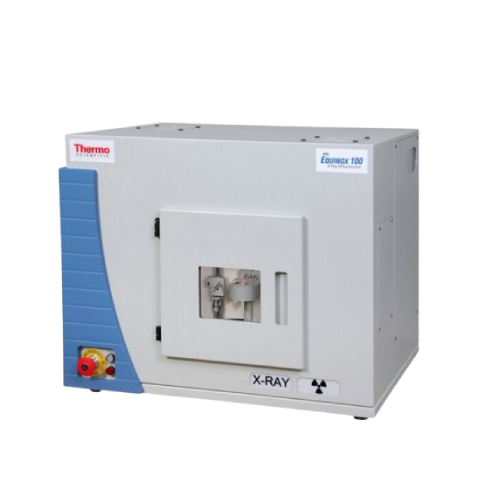
Get a dedicated XRD instrument designed for QA/QC, academic, and routine X-ray diffraction applications with the compact, affordable Thermo Scientific™ ARL™ EQUINOX 100 X-ray Diffractometer. Occupying a third of the space of a conventional diffractometer, this stand alone, transportable bench top instrument offers true flexibility; no external water cooling is required, and it plugs into a standard electrical power outlet. This instrument simplifies operation without sacrificing speed or performance. Measurements are completed in seconds and operating conditions are saved in the software.
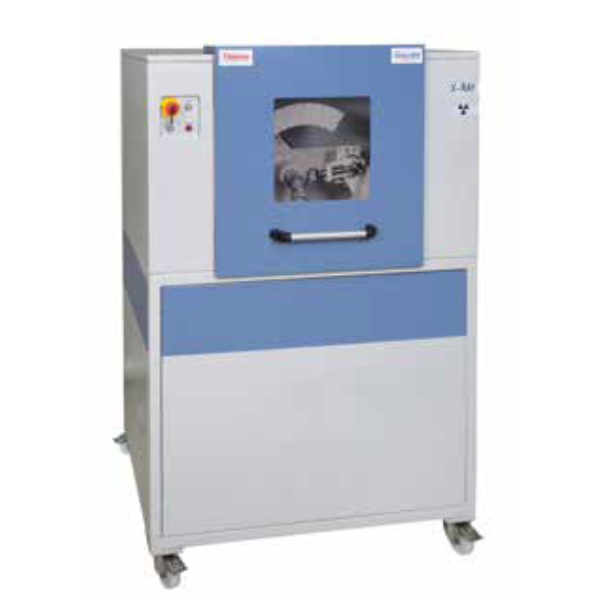
An XRD (X-Ray Diffraction) system works by directing a focused X-ray beam onto a crystalline sample. When the X-rays interact with the regularly arranged atomic planes in the material, they are diffracted at specific angles according to Bragg’s Law. A detector measures the intensity of these diffracted X-rays as the sample and detector rotate. The resulting diffraction pattern acts as a fingerprint of the material’s crystal structure, allowing the software to identify phases, determine lattice parameters, crystallite size, and other structural properties.
QS Metrology provides XRD Systems across India, serving all major industrial regions, including:
Delhi NCR, Rajasthan, Punjab, Uttar Pradesh, Himachal Pradesh, Uttarakhand, Jammu & Kashmir
An XRD system is used to identify crystalline phases, determine crystal structure, measure lattice parameters, and analyze material properties in research, quality control, and industrial applications.
XRD can analyze a wide range of crystalline materials including powders, metals, ceramics, minerals, cement, pharmaceuticals, thin films, and nanomaterials.
Sample preparation is usually simple and depends on the sample type. Powders are typically ground and mounted, while bulk or thin-film samples may require minimal preparation.
XRD is considered a non-destructive technique, as the sample remains chemically unchanged after analysis.
XRD provides phase identification, crystal structure details, crystallite size, strain, lattice parameters, and quantitative phase analysis.
XRD systems are widely used in materials science, metallurgy, mining, cement, ceramics, pharmaceuticals, semiconductors, polymers, and academic research laboratories.
Our experts will guide you to the right technology.