


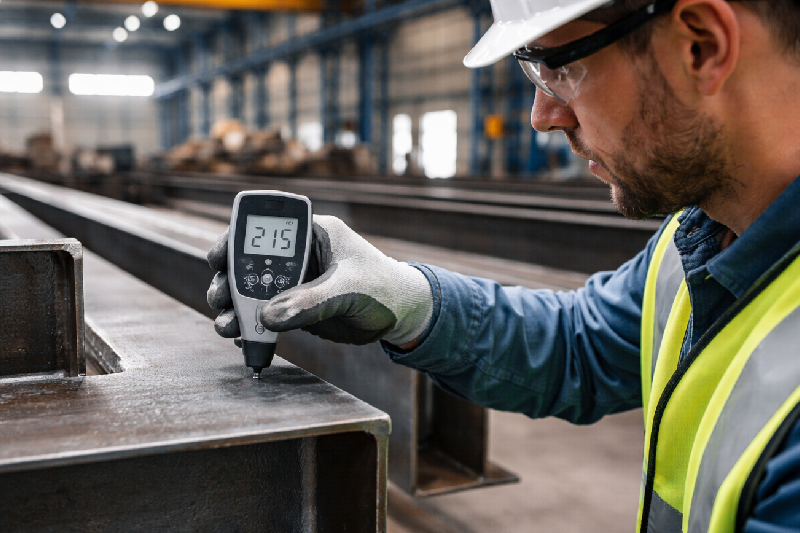
A single coating failure can cost lakhs in rework, delays, or even rejected batches.
That’s where a coating thickness gauge (DFT meter) becomes a game-changer.
In this blog, you’ll discover how the right coating thickness tester helps you improve quality, reduce losses, and stay audit-ready—without slowing down production.
Table of Contents
- What is a Coating Thickness Gauge?
- Why Thickness Measurement Matters in Fabrication
- Key Use Cases in Steel & Metal Industries
- Benefits That Drive ROI
- How to Choose the Right Thickness Gauge
- Conclusion + CTA
- FAQs
What is a Coating Thickness Gauge?
A coating thickness gauge, also known as a DFT meter (Dry Film Thickness meter), is a device used to measure the thickness of paint or coating applied on metal surfaces.
It ensures that coatings meet required standards—whether it’s for corrosion protection, durability, or compliance.
In simple terms:
It tells you if your coating is too thin (risk of corrosion) or too thick (wastage and defects).
Why Thickness Measurement Matters in Steel & Fabrication?
Let’s be honest—coating is not just about appearance. It directly impacts product life and performance.
Without proper measurement using a thickness gauge paint tool, you risk:
- Premature corrosion
- Failed inspections and audits
- Increased rework and cost
- Loss of client trust
Real Scenario:
A fabrication unit supplying structural steel to an EPC contractor failed inspection due to inconsistent coating. The result? Entire batch rejection.
A simple coating thickness tester could have prevented that.
Key Use Cases in Steel & Metal Fabrication Industries
1. Quality Control During Production
QA teams use a coating thickness gauge to ensure every component meets required coating standards.
- Maintain uniform coating thickness
- Reduce human error in inspection
- Ensure batch consistency
2. Corrosion Protection Verification
In industries like infrastructure and heavy fabrication, corrosion is a silent killer.
A DFT meter helps ensure:
- Proper coating coverage
- Long-term durability
- Compliance with project specifications
3. Pre-Dispatch Inspection
Before shipping products, inspectors use a thickness gauge to verify coating levels.
This helps:
- Avoid customer complaints
- Ensure first-time approval
- Build brand credibility
4. Vendor Quality Checks
Procurement and QA teams use a coating thickness tester to inspect incoming materials from vendors.
- Validate supplier quality
- Avoid defective raw materials
- Maintain production standards
5. Powder Coating & Galvanizing Applications
In powder coating units, maintaining consistent thickness is critical.
Using a thickness gauge paint device helps:
- Achieve smooth finish
- Reduce coating wastage
- Improve process efficiency
Benefits That Drive ROI (Not Just Features)
Let’s talk business impact—because that’s what matters.
Reduce Rework Costs
Accurate measurement ensures fewer defects → less rework → direct cost savings.
Improve Production Efficiency
No guesswork. Faster inspections. Smoother workflow.
Ensure Compliance (ISO / ASTM)
Stay ready for audits with precise coating data.
Build Client Trust
Consistent quality = repeat business + long-term contracts.
Minimize Material Wastage
Avoid over-coating and save on expensive materials.
How to Choose the Right Coating Thickness Gauge?
Not all gauges are built the same. Choosing the right one depends on your application.
Here’s what to look for:
- Accuracy & Calibration Stability
- Compatibility (Ferrous & Non-Ferrous Metals)
- Ease of Use (Handheld vs Advanced Digital)
- Data Storage & Reporting Features
- Durability for Industrial Use
Pro Tip:
If your team works on-site or across multiple locations, go for a portable digital DFT meter with quick readings.
What Makes a Good Investment?
A high-quality coating thickness tester is not an expense—it’s a cost-saving tool.
Companies that invest in reliable thickness gauge paint solutions often see:
- 20–30% reduction in rejection rates
- Faster project approvals
- Improved operational efficiency
Conclusion: Don’t Let Coating Errors Cost You
In steel and metal fabrication, precision is everything.
A reliable coating thickness gauge (DFT meter) helps you stay ahead—by ensuring quality, reducing risk, and improving profitability.
If you’re still relying on visual checks or outdated tools, you’re leaving money on the table.