


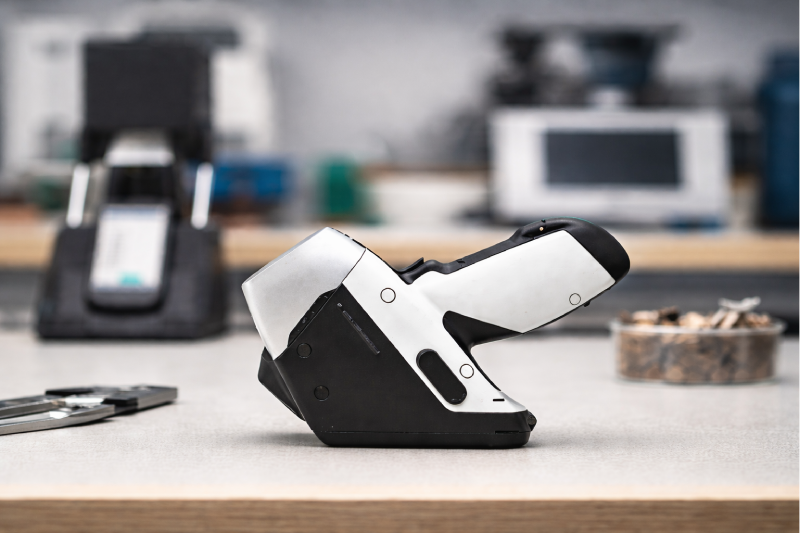
In modern metrology and material testing environments, handheld XRF analyzers have become indispensable tools for rapid, non-destructive elemental analysis. From positive material identification (PMI) and scrap sorting to RoHS compliance and alloy verification, X-ray fluorescence spectroscopy enables accurate decision-making directly at the inspection site.
However, selecting the right handheld XRF is not as straightforward as comparing prices or brand names. A wrong choice can lead to poor detection limits, inaccurate results, slow testing, or limitations in real-world applications. For laboratories, manufacturing plants, and inspection agencies in India, understanding the metrology-critical factors behind XRF performance is essential.
Below are five critical factors every professional should evaluate before investing in a handheld XRF analyzer.
1. Detector Technology and Sensitivity
The detector is the heart of any X-ray fluorescence analysis XRF system. It directly determines elemental sensitivity, speed, and accuracy.
Modern handheld XRF analyzers typically use either PIN diode detectors or Silicon Drift Detectors (SDD). While PIN detectors are cost-effective, SDD technology offers significantly higher resolution, faster count rates, and better detection of light elements such as magnesium, aluminum, silicon, phosphorus, and sulfur.
From a metrology standpoint, higher detector resolution reduces spectral overlaps and improves quantitative accuracy—especially in complex alloys and multi-element samples. For applications like PMI, aerospace alloys, and quality audits, SDD-based XRF instruments provide superior repeatability and confidence.
Key takeaway: Always prioritize detector performance over price if analytical reliability matters.
2. X-ray Tube Voltage and Power Output
The X-ray tube defines the excitation energy used in X-ray fluorescence spectroscopy. Tube voltage typically ranges between 40 kV and 50 kV in handheld instruments.
While higher voltage enables better excitation of heavy elements such as silver, tin, antimony, and rare metals, not every application requires maximum power. For routine alloy analysis, a well-optimized 40 kV system may deliver faster results with lower power consumption.
In metrology-driven industries, stability of tube output is as important as voltage itself. Consistent excitation ensures repeatable measurements across batches and operators.
Key takeaway: Choose tube voltage based on application requirements, not marketing numbers.
3. Anode Material and Excitation Efficiency
An often-overlooked parameter in handheld XRF analyzers is the X-ray tube anode material, commonly tungsten (W) or rhodium (Rh).
The anode material influences the shape of the excitation spectrum, affecting detection limits and background noise. Tungsten anodes offer strong excitation for heavy elements, while rhodium anodes provide smoother spectral output beneficial for light and mid-range elements.
From a metrology perspective, the right anode material improves analytical precision, reduces measurement time, and enhances performance across diverse sample types.
Key takeaway: Match anode material to the elements you measure most frequently.
4. Filter Systems and Elemental Optimization
Filters play a crucial role in X-ray fluorescence analysis XRF by shaping the excitation beam to improve signal-to-noise ratio. Entry-level devices may use fixed filters, while advanced handheld XRF models feature automatic multi-filter systems.
For metrology professionals, automatic filter selection ensures optimized excitation for different elemental ranges without operator intervention. This leads to consistent results, lower operator dependency, and improved measurement repeatability—especially important in compliance testing and audits.
In quality-controlled environments, filter optimization directly impacts measurement uncertainty and detection limits.
Key takeaway: Advanced filter systems translate into better accuracy and faster workflows.
5. Measurement Geometry, Collimator, and Spot Size
Not all samples are large, flat, or homogeneous. Welds, small components, inclusions, and coated materials demand precise measurement geometry.
Handheld XRF analyzers with adjustable collimators and smaller spot sizes allow targeted analysis without averaging surrounding material. From a metrology standpoint, this ensures representative sampling and prevents false results—especially in weld inspection, jewelry testing, and electronic components.
Additionally, stable positioning, rugged housing, and ergonomic design contribute to consistent measurements in field conditions.
Key takeaway: Spot size control is critical for accurate micro-area analysis.
Why Choosing the Right XRF Matters in Indian Metrology Applications?
In India’s growing manufacturing and inspection ecosystem, reliable material verification is essential for export compliance, safety standards, and cost control. Working with trusted XRF spectrometer suppliers in India ensures not only quality equipment but also proper calibration, service support, and operator training.
A well-selected handheld XRF analyzer reduces rework, prevents material mix-ups, and strengthens quality assurance systems across industries such as automotive, power, infrastructure, oil & gas, and recycling.
Investing in handheld XRF analyzers is a strategic decision that directly impacts analytical accuracy, compliance, and operational efficiency. By evaluating detector technology, tube voltage, anode material, filter systems, and measurement geometry, metrology professionals can select an instrument that delivers long-term value.
With the right balance of performance and application focus, X-ray fluorescence spectroscopy becomes a powerful ally in modern quality control and material science.