

QS Metrology | Portable XRF Analyser | Portable XRF Spectrometer | Optical Emission spectrometer | XRD | Surface roughness Tester | roughness measuring machine | Portable Roughness Tester | Contour measuring machine | Contour Tester | Coordinate measuring machine | 3 D Coordinate measuring machine | Weld penetration inspection | Weld penetration measurement System | Stereomicroscope | Coating thickness tester | Video Measuring machine | Metallurgical Image analysis | Metallurgical microscope

admin

What is a Coating Thickness Gauge Complete Guide to DFT Meters and Thickness Gauges

What is a Coating Thickness Gauge? Complete Guide to DFT Meters and Thickness Gauges

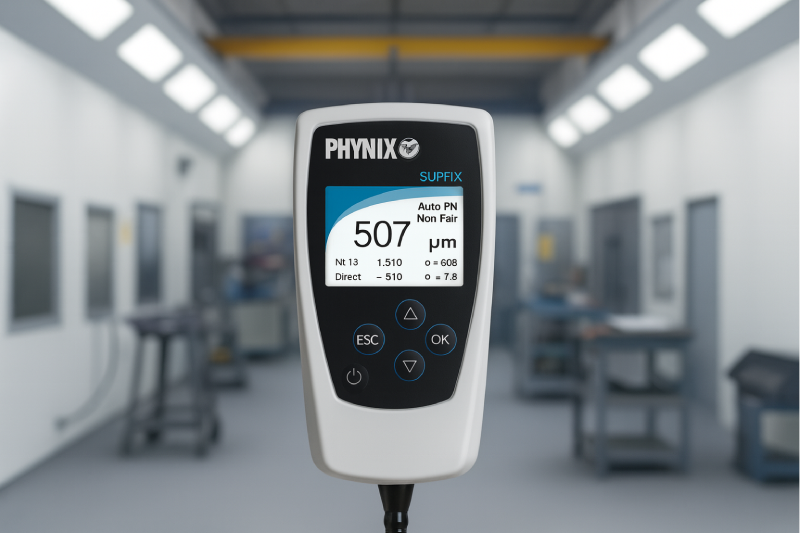
A coating thickness gauge is a precision instrument used to measure the thickness of coatings applied to different surfaces. Also called a coat thickness gauge or DFT meter, it is essential in industries like automotive, aerospace, manufacturing, construction, and marine to ensure quality, durability, and compliance of coatings. Using a thickness gauge accurately measures DFT paint layers on metals, plastics, and other substrates. Why Use a Coating Thickness Gauge? Using a coating thickness gauge is vital for – Quality Control – Ensures the applied coating meets the required specifications. Corrosion Protection – Correct DFT prevents rust and corrosion on metal surfaces. Cost Efficiency – Avoids over-application or under-application of paint or coatings. Compliance – Meets industry standards for DFT paint and protective coatings. A reliable coat thickness gauge provides fast, accurate, and repeatable results, making it indispensable for professionals working with industrial coatings. Types of Coating Thickness Gauges There are several types of thickness gauges and DFT meters, each with its specific applications – Digital Coating Thickness Gauges Digital DFT meters give precise, non-destructive measurements of DFT paint layers. They are easy to use, store multiple readings, and provide statistical analysis for quality assurance. Coating thickness gauges like these are suitable for both fieldwork and laboratory use. Mechanical Coating Thickness Gauges Mechanical coat thickness gauges are simple, reliable, and do not require batteries or electronics. They are ideal for basic applications or environments where digital devices are unsuitable. Destructive Coating Thickness Gauges Some thickness gauges measure coatings by removing a small part of the coating. These DFT meters are especially useful for multi-layer coatings or non-metallic substrates. How Coating Thickness Gauges Work A coating thickness gauge works on various measurement principles depending on the substrate – Electromagnetic Induction – Measures coatings on ferrous metals. Eddy Current – Measures coatings on non-ferrous metals and non-conductive surfaces. By using a DFT meter or thickness gauge, inspectors can obtain accurate DFT paint readings without damaging the surface. Key Features to Consider in a Coating Thickness Gauge When selecting a coating thickness gauge, consider – Substrate Compatibility – Ferrous or non-ferrous. Measurement Range – Maximum and minimum DFT paint thickness measurable. Accuracy – Precision is critical for coating thickness gauges. Data Storage & Analysis – Some DFT meters store thousands of readings. Portability – Handheld coat thickness gauges are ideal for field inspections.   Applications of Coating Thickness Gauges Coating thickness gauges and DFT meters are used in multiple industries – Automotive Industry – Measuring paint layers on vehicles for quality control. Construction – Checking protective coatings on steel and concrete. Aerospace – Ensuring coatings meet strict DFT paint standards. Manufacturing – Verifying coating thickness in industrial processes. Marine Industry – Monitoring anti-corrosion coatings on ships and structures. Benefits of Using a DFT Meter or Thickness Gauge Ensures coating thickness meets manufacturer specifications. Prevents premature corrosion by accurate DFT paint measurement. Reduces material wastage by avoiding over-application of coatings. Improves compliance with industrial standards using a coating thickness gauge. Enables fast, non-destructive testing of coated surfaces. A coating thickness gauge, also known as a coat thickness gauge or DFT meter, is an essential tool for measuring DFT paint accurately. Whether in automotive, aerospace, manufacturing, or construction, using a thickness gauge ensures quality, durability, and regulatory compliance. Selecting the right coating thickness gauge improves inspection efficiency and protects investments in coated surfaces. Investing in a reliable DFT meter or coat thickness gauge guarantees precise measurement of coating thickness, making it a must-have tool for professionals across industries. Explore Our Coating Thickness Gauges

What is a CMM Machine, and its Applications?

What is a CMM Machine, and its Applications?

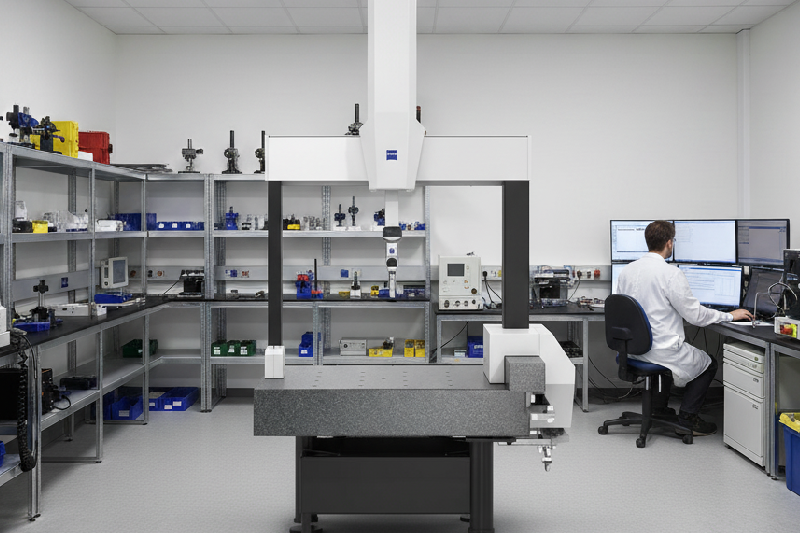
What Is a CMM Machine? A CMM (Coordinate Measuring Machine) machine is a high-precision device used 3D inspection of parts. Using a cmm machine, engineers can ensure that each part meets design specifications. The CMM has become essential in industries like automotive, aerospace, and medical devices due to its unmatched precision and repeatability. Types of CMM Machines There are several types of cmm machines depending on design and application – 1. Bridge CMM Machine The most common cmm, where the probe moves over a stable bridge structure. Ideal for small to medium parts. 2. Cantilever CMM A cmm machine supported on one side for easy part access. Suitable for moderate accuracy requirements. 3. Gantry CMM Machine Large coordinate measuring machines for inspecting very large components, common in aerospace and shipbuilding. 4. Horizontal Arm CMM A flexible cmm machine used for measuring assemblies with complex geometries. 5. Portable / Articulated Arm CMM A portable coordinate measuring machine for on-site inspections, offering flexibility with moderate accuracy. Types of Probes in a CMM Touch-trigger probes in a cmm machine record points when touching the surface. Scanning probes allow the cmm to capture continuous surfaces. Optical and laser probes in a coordinate measuring machine capture 3D data without contact. Hybrid probes combine contact and non-contact methods for versatile inspections on a cmm machine. Uses of a CMM Machine A CMM is widely used for – Quality control and inspection – Ensuring parts meet design tolerances using a cmm. First Article Inspection – Validating the first part of a production run with a cmm machine. Reverse engineering – Measuring existing parts to recreate CAD models with a coordinate measuring machine. Tooling and mold validation – Checking molds with a cmm before production. Assembly verification – Using a cmm machine to ensure parts fit correctly. Process optimization – Feedback from a coordinate measuring machine helps improve manufacturing processes. Advantages of a CMM High Precision – A cmm measures parts with micrometer-level accuracy. Automation – A cmm machine can run repeated measurements without human error. Versatility – The coordinate measuring machine can handle simple and complex geometries. Data Traceability – Measurements from a cmm machine are documented for reports and compliance. Reduced Errors – Using a cmm, human measurement mistakes are minimized. Limitations of a CMM Cost – A cmm machine is a significant investment. Environmental Sensitivity – Temperature and vibration can affect a coordinate measuring machine. Speed – Some cmm machines are slower than modern scanning systems. Skill Requirement – Operating a cmm requires trained personnel. A cmm machine, or coordinate measuring machine, is an indispensable tool in modern manufacturing. From precision measurement to quality control, a cmm ensures every part meets design standards. Using a coordinate measuring machine improves efficiency, reduces errors, and guarantees high-quality production in automotive, aerospace, medical, and industrial applications. Explore Our CMM Machines

Weld Penetration Defects And Streamlining Of Measurement And Inspection

Weld Penetration Defects And Streamlining Of Measurement And Inspection

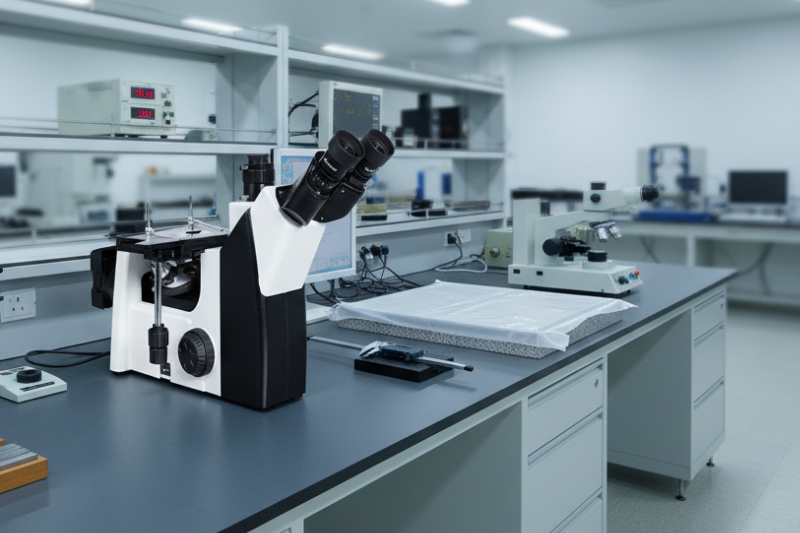
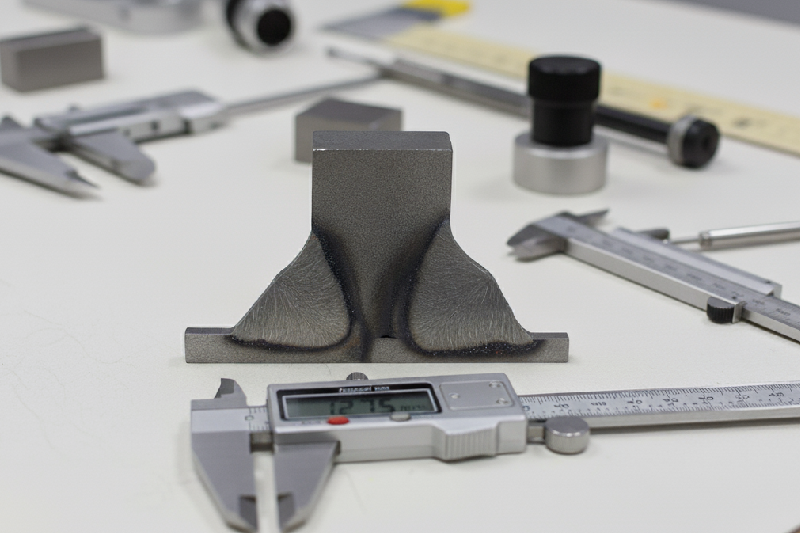
Weld penetration defects and streamlining of measurement and inspectionIf you are into metal joining business, you know the importance of welding. This feature is widely seen used in making items like airplanes, automobiles and so much more! The weld quality can always get assessed by measuring the present dimensions of weld penetration on the current cross-section sample. It helps in inspecting defects like joining failure and insufficient penetration down the road. We, at QS Metrology Private Limited, would like you to know more about the field of Weld penetration inspection and how it has changed the course of time. We will be using the power of 4K digital Microscope, which expresses the boundaries, revolving around metal structure and the defective areas for low-contrast weld cross sections. At the same time, our microscope is able to measure 2D and 3D dimensions at a rather quicker rate and generate measurement results like images and values automatically within a report format. It helps in improving the efficiency level in a rather dramatic manner. Why is weld penetration inspection so vital?From what we have seen so far, welding is widely used to join metallic components for products like ships, railroad cars, planes and automobiles. In terms of automobiles, the joining takes place by using different forms of resistance spot welding, arc welding and laser welding.These techniques are then utilized on frames, bodies, transmissions, engines, chassis and other components, where stress gets applied while driving the automobile.Now you know the importance of strength design of the welds and focusing on the weld quality inspection.For that, we would like to address the dimensional measurement of the cross sections over here.We would like you to know more about Weld penetration analysis in order to get the right measurements done when the time comes. Join hands with our experts as we explore all the features coming along your way over here. Dealing with mechanical properties along with the weld fractures:The welds, which are a perfect combination of weld beads and penetration, help in joining the base materials. They are also the metallic materials like filler materials, which are going to be melted and then solidified. In any field of typical arc welding, the metal structures are subject to change continuously not just in weld metal but in parts of base materials as affected by welding heat.In subject to the change in question, the metal materials’ mechanical properties will also get to change from time to time.Then you have the reinforcement, on the other hand, which will be formed on weld bead surface, which will have discontinuities of own.Such discontinuity concentration will move forward towards mechanical property deviation. It will cause the fractures because of stress concentration.We would like you to know more about Weld penetration measurement before you can plan to deal with mechanical properties of the weld. Our team of mechanics is more than happy to offer the best and most rewarding help, as and when asked for. Focusing on the welding quality:Our team of experts is more than happy to offer the much needed Weld quality inspection if you don’t want to get into trouble later. More than that, we are able to focus on welding quality from start to finish, because we don’t want you to compromise on the results. When it is about the strength design of the metallic items, materials are selected based on the load applied to the final item.The load will get determined first that will be applied to every metallic material out there.On the other hand, the loads on welds of every material must be focused at while determining the strength design.It helps in setting a proper standard for the welding quality that you are planning to achieve right now.It is always important for you to inspect the welding quality, depending on the strength design by measuring the throat thickness, depth of the penetration and the leg length.We will help you to focus on the Weld quality check by dealing with macroscopic measurement of all the cross sections, once you are done with the welding.To help you learn more about the welding quality check and also to gain some information on welding quality related to penetration, we would like you to visit us at QS Metrology Private Limited. Reach out to us by calling at 080 3730 1335 and we will answer it right away!

Advantages Of Video Measuring Systems For Injection Molding

Advantages Of Video Measuring Systems For Injection Molding

Advantages Of Video Measuring Systems For Injection Molding The video centric vision system for precision inspection and measurement is one flexible and accurate tool, which has widespread uses throughout the machine tool industry. Our team from the house of QS Metrology would like to help you understand the norms, revolving around Video Measuring machine and let you understand more about the machine and its growing importance in terms of injection molding right now. A little bit of back history: Right from the time 2008, video measuring machines were widely used by global manufacturers. The very first models were made and developed in the US and used for dimensional measurement uses within the quality control sector of the manufacturing units. We have been working on presenting the most advanced Vision measurement system to our clients and they have been working with us since.Injection molding centric video measuring theme has evolved big time with some technical advances in manufacturing units. Right now, parts are designed in CAD software. After that, those designs are machined on tools, which tighter tolerances. Along with that, the non-contact vision measurement technology has evolved big time. The quality features you get on the manufactured parts: Thanks to our advanced and thoughtful Video measuring system, now you get the chance to ensure quality features on all your injected machine parts. The video measuring machines will verify the features quality on manufactured parts. New software and computers, modernized illumination techniques and some advances within the optical designs will make video measurements a lot faster and highly accurate in terms of measurement. The cameras used for video measurements are made using numerous pixels. Therefore, each pixel will act like single-edge detector like comparator. They can cover the tasks at the same time. The only difference that is left between these two models will be the fundamental advantage of the video measurements out there. As the camera is able to offer singles from each pixel, the video measuring machines are able to multiply the edge points from the whole image. This step helps in providing faster inspections and then maximizes the measurements throughput. Working with our video measuring machines has helped so many companies all around the world and would like to do the same for you as well. Once you are sure of the machines we have in store, you can move forward from there to get quality help all the time. Perfect for exposing the edges: From what we have seen while working with the Vision based measurement machines, exposing edges will get a lot easier than before. These systems are good for exposing those edges, which will not cast a shadow whenever lit from behind. It helps in opening up the technology to various parts of sizes, all shapes and materials as constrained only to fit on measuring machine. There are different other features, which are caught by the camera too. This feature makes video measurements rather popular for various applications across multiple industries. As these measurements are performed to verify or confirm the dimensions to match the drawing of the design, there are some consequences to consider. Focus on the points on how the video measurement of the edges and surfaces differs from how those same features get measured by CMM with the help of a touch probe. Get some precise edges measured, thanks to our machines: With the help of video measuring systems for the injection molding, you get to measure the component edges in a direct manner. There will be an edge that exists whenever a transition is there in the scene, as imaged on camera. It will be presented at boundary, right between areas where you will find some changes in characteristics. Some of those characteristics are: Color Intensity Roughness towards the boundary We believe that the touch probe CMM will not measure the edges directly as the points are procured from surfaces that intersect areas as seen in edges. These differences will mark the changes while comparing those measurements with those on edges against design drawing. In order to learn more about the touch probe CMM and video measuring machines, we would like to welcome you to come and join us at QS Metrology Private Limited. Give us a ring at 080 3730 1335 for detailed help.

Scroll to Top