


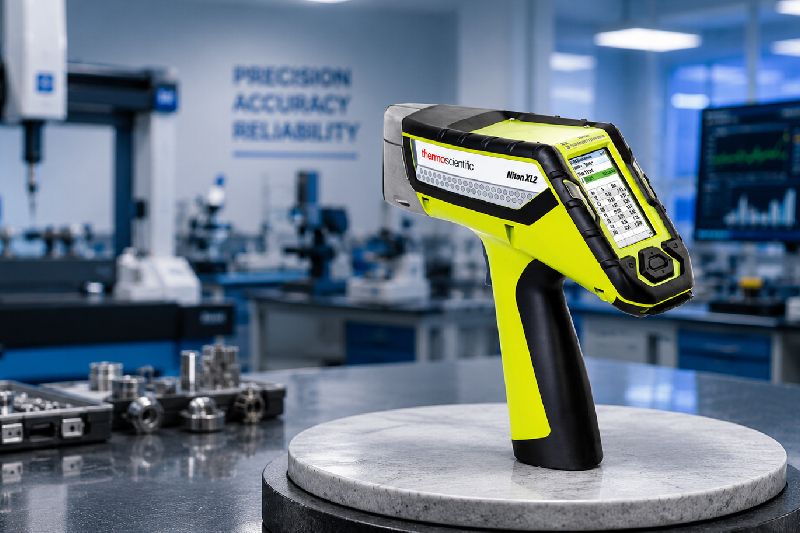
Gold purity is the foundation of trust in the jewellery industry. Whether you’re manufacturing bridal jewellery, refining precious metals, exporting ornaments, or operating a hallmarking centre, even a small error in purity verification can lead to financial losses, customer disputes, and reputational damage.
Traditional gold testing methods have served the industry for decades, but many of them require scratching, cutting, or using chemicals that can alter or damage valuable products. As customer expectations and quality standards continue to rise, jewellery manufacturers need a faster, more accurate, and non-destructive solution.
This is where XRF analyzers are transforming quality control. With instant elemental analysis and zero damage to the product, these advanced instruments help manufacturers verify gold purity confidently while improving operational efficiency.
In this guide, you’ll discover how portable XRF technology works, why leading jewellery manufacturers are adopting it, and how it can improve your production and quality assurance processes.
Table of Contents
- What Are XRF Analyzers?
- Why Is Gold Purity Verification Important?
- How Do Portable XRF Analyzers Work?
- Benefits of Using Portable XRF Analyzers in Jewellery Manufacturing
- Traditional Gold Testing vs Portable XRF Analysis
- Applications Across the Jewellery & Precious Metals Industry
- How to Choose the Right Portable XRF Analyzer
- Frequently Asked Questions
- Conclusion
What Are XRF Analyzers?
XRF analyzers are advanced material analysis instruments that use X-ray fluorescence technology to determine the elemental composition of metals without cutting, scratching, or damaging the sample.
For jewellery manufacturers, these analyzers quickly identify the percentage of:
- Gold (Au)
- Silver (Ag)
- Platinum (Pt)
- Palladium (Pd)
- Copper (Cu)
- Nickel (Ni)
- Zinc (Zn)
- Other alloying elements
Within just a few seconds, operators receive highly accurate purity results, making the inspection process significantly faster than conventional methods.
What is an XRF analyzer used for in jewellery manufacturing?
An XRF analyzer is used to verify gold purity, identify alloy composition, detect counterfeit jewellery, inspect incoming raw materials, and ensure consistent product quality without damaging the jewellery.
Why Is Gold Purity Verification So Critical?
Gold jewellery is sold based on trust.
A slight variation in purity can impact pricing, hallmark certification, export compliance, and customer confidence. For manufacturers handling hundreds or thousands of jewellery pieces daily, manual testing methods simply cannot keep pace.
Some common challenges include:
- Counterfeit or mixed alloys
- Incorrect alloy composition
- Supplier inconsistencies
- Hallmark compliance issues
- Production quality variations
- Costly product rejections
Using portable XRF analyzers helps eliminate these risks by providing reliable results before products move to the next production stage.
How Do Portable XRF Analyzers Work?
A portable XRF spectrometer directs low-energy X-rays onto the jewellery surface.
Each metal emits a unique fluorescent signature that the analyzer measures and converts into an accurate elemental composition report.
The entire inspection process typically takes less than 10 seconds.
The process is simple:
Step | Process |
1 | Place jewellery under the analyzer |
2 | Start the measurement |
3 | X-rays excite metal atoms |
4 | Detector measures fluorescence |
5 | Software displays purity percentages instantly |
Unlike acid testing or destructive methods, no sample preparation is required.
Can portable XRF analyzers detect fake gold?
Yes. Portable XRF analyzers accurately identify gold content and detect metals commonly used in counterfeit jewellery, helping manufacturers and buyers verify authenticity instantly.
How Do Handheld XRF Analyzers Improve Jewellery Manufacturing?
Modern handheld XRF analyzers have become an essential quality control tool because they combine speed, precision, and portability.
1. Non-Destructive Testing
Every jewellery piece remains completely intact.
No scratches.
No cutting.
No chemical damage.
This is especially valuable when inspecting finished ornaments or luxury jewellery collections.
2. Instant Purity Results
Instead of waiting for laboratory reports, manufacturers receive accurate purity analysis within seconds.
This significantly improves production speed.
3. Higher Quality Control
Consistent alloy composition leads to:
- Better product consistency
- Fewer customer complaints
- Reduced manufacturing defects
- Improved hallmark compliance
4. Lower Testing Costs
Traditional testing often requires consumables, chemicals, or laboratory processing.
A handheld XRF machine minimizes recurring testing expenses while increasing productivity.
5. Better Supplier Verification
Incoming gold bars, casting materials, recycled metals, and purchased alloys can all be verified before entering production.
This prevents expensive material-related issues later in manufacturing.
Traditional Gold Testing vs Portable XRF Analysis
Feature | Traditional Testing | Portable XRF Analyzers |
Product Damage | Yes | No |
Testing Time | Several minutes to hours | Seconds |
Chemical Usage | Yes | No |
Sample Preparation | Required | Not Required |
Portability | Limited | High |
Real-Time Results | No | Yes |
Multiple Element Detection | Limited | Yes |
For manufacturers producing large volumes, portable XRF technology offers a clear operational advantage.
Where Are Portable XRF Analyzers Used in the Jewellery Industry?
Today’s portable XRF analyzers are widely used across multiple business operations.
Jewellery Manufacturing
- Gold purity verification
- Alloy composition analysis
- Production quality inspection
Hallmarking Centres
- Pre-certification testing
- Compliance verification
Precious Metal Refining
- Incoming material inspection
- Purity confirmation
Bullion Trading
- Gold bar authentication
- Coin verification
Assay Laboratories
- Elemental composition analysis
- Material certification
Jewellery Export Houses
- Export quality compliance
- Customer-specific purity verification
How to Choose the Right XRF Analyzer for Your Business
If you’re planning to invest in a new analyzer, consider these factors:
- High accuracy across precious metals
- Fast measurement speed
- Easy-to-use software
- Portable and lightweight design
- Low maintenance requirements
- Reliable after-sales service
- Calibration support
- Trusted XRF spectrometer suppliers India
Choosing the right supplier ensures long-term performance, technical support, and maximum return on investment.
Which industries benefit most from portable XRF analyzers?
Portable XRF analyzers are widely used in jewellery manufacturing, precious metal refining, hallmarking centres, bullion trading, recycling facilities, assay laboratories, mining, metal fabrication, and quality inspection industries.
Why More Jewellery Manufacturers Are Switching to XRF Technology
As production volumes increase and quality expectations become stricter, manufacturers cannot rely solely on traditional testing methods.
Portable XRF technology helps businesses:
- Improve customer trust
- Increase production efficiency
- Reduce inspection costs
- Minimize human error
- Meet international quality standards
- Strengthen supplier quality management
More importantly, it enables manufacturers to inspect every product confidently without risking damage to valuable jewellery.
Conclusion
Accuracy, speed, and product safety have become essential in today’s jewellery manufacturing industry.
Modern XRF analyzers provide a practical solution for verifying gold purity without scratching, cutting, or chemically altering valuable products. From production lines and hallmarking centres to precious metal refiners and assay laboratories, portable XRF technology delivers reliable results that improve quality control and build customer confidence.
For businesses looking to streamline inspections, reduce operational costs, and ensure consistent product quality, investing in advanced XRF analysis is no longer just an upgrade—it is a strategic business decision.
Frequently Asked Questions (FAQs)
What are XRF analyzers used for?
XRF analyzers determine the elemental composition of metals, allowing jewellery manufacturers to verify gold purity, detect counterfeit alloys, and perform non-destructive quality inspections.
Can handheld XRF analyzers test gold without damaging jewellery?
Yes. Handheld XRF analyzers use X-ray fluorescence technology to analyze metal composition without scratching, cutting, or altering the jewellery.
Are portable XRF analyzers accurate?
Modern portable XRF analyzers deliver highly accurate elemental analysis within seconds, making them suitable for quality control, refining, and hallmark verification.
What is the difference between a handheld XRF machine and traditional gold testing?
Traditional testing often uses chemicals or destructive techniques, whereas a handheld XRF machine provides instant, non-destructive analysis with no sample preparation.
Who should invest in a portable XRF spectrometer?
Jewellery manufacturers, hallmarking centres, precious metal refiners, bullion dealers, assay laboratories, recyclers, and quality control departments benefit significantly from portable XRF technology.
Why should businesses buy from trusted XRF spectrometer suppliers India?
Trusted suppliers provide certified instruments, technical support, calibration services, training, and after-sales assistance, ensuring long-term performance and reliability.