


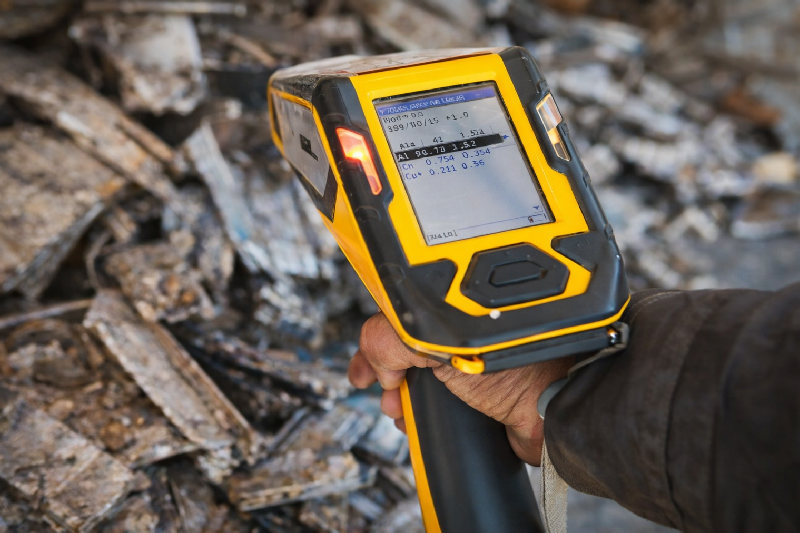
In today’s fast-paced manufacturing and metal fabrication industries, quality control is no longer just a final checkpoint—it is an ongoing process that directly impacts productivity, safety, and profitability. As material specifications become stricter and supply chains more complex, manufacturers need faster and more reliable ways to verify metals and alloys. This is where handheld XRF analyzers play a critical role.
Handheld X-ray fluorescence technology has transformed how metals are tested, identified, and traced across production environments. By enabling real-time, non-destructive material analysis, it empowers quality teams to make informed decisions instantly—right on the shop floor.
Understanding X-Ray Fluorescence Technology
X-ray fluorescence analysis (XRF) is an elemental analysis technique used to determine the chemical composition of materials. When a material is exposed to X-rays, its atoms emit secondary (fluorescent) X-rays that are unique to each element. By measuring these emissions, the device identifies and quantifies the elements present.
Modern handheld XRF analyzers bring this advanced laboratory technology into a portable, easy-to-use format. Unlike traditional lab testing methods that require sample preparation and long turnaround times, handheld devices deliver results within seconds—without damaging the part being tested.
X-ray fluorescence analysis (XRF) is an elemental analysis technique used to determine the chemical composition of materials. When a material is exposed to X-rays, its atoms emit secondary (fluorescent) X-rays that are unique to each element. By measuring these emissions, the device identifies and quantifies the elements present.
Modern handheld XRF analyzers bring this advanced laboratory technology into a portable, easy-to-use format. Unlike traditional lab testing methods that require sample preparation and long turnaround times, handheld devices deliver results within seconds—without damaging the part being tested.
Why Metal Quality Control Needs Real-Time Analysis?
Metal manufacturing and fabrication rely heavily on material accuracy. Using the wrong alloy—even by a small margin—can lead to part failure, safety risks, non-compliance, and costly rework. Traditional quality control methods often depend on paperwork, supplier certifications, or off-site lab testing, which introduces delays and uncertainty.
Handheld XRF technology addresses these challenges by allowing manufacturers to:
- Verify incoming raw materials instantly
- Confirm alloy grades during production
- Detect material mix-ups before final assembly
- Reduce dependency on external labs
This real-time approach significantly improves confidence in material quality at every stage of the production process.
Improving Traceability Across the Supply Chain
Traceability has become a major requirement in industries such as aerospace, automotive, energy, and defense. Manufacturers must be able to prove that materials meet specific standards and originate from approved sources.
Using X-ray fluorescence spectroscopy, quality teams can create a clear digital record of material composition at multiple points—receiving, processing, and final inspection. Each measurement becomes part of a traceable quality trail that supports audits, certifications, and customer requirements.
Handheld XRF analyzers also help verify supplier claims, ensuring that materials delivered match their documentation. This added layer of verification reduces risk and strengthens supplier accountability.
Key Advantages of Handheld XRF Analyzers in Quality Control
1. Non-Destructive Testing
One of the biggest benefits of handheld XRF technology is that it is non-destructive. Parts can be tested without cutting, grinding, or altering them, making it ideal for finished components, high-value parts, and in-service inspections.
2. Speed and Efficiency
Results are available in seconds, allowing operators to test more samples in less time. This speed helps prevent bottlenecks and supports faster decision-making on the shop floor.
3. On-Site Verification
With portable devices, testing can be performed anywhere—warehouse, production line, or field location. There is no need to send samples to a lab and wait days for results.
4. Reduced Errors and Rework
Early detection of incorrect materials prevents downstream errors, saving time, labor, and material costs.
Applications Across Metal Manufacturing Industries
Handheld XRF analyzers are widely used in:
- Metal fabrication – alloy verification before welding or machining
- Automotive manufacturing – ensuring compliance with material specifications
- Aerospace – strict traceability and material verification requirements
- Power and energy – inspection of pipes, valves, and structural components
- Recycling and scrap sorting – fast identification of metal grades
In each case, X-ray fluorescence analysis XRF supports consistent quality and regulatory compliance.
Supporting Compliance and Industry Standards
Many international standards require accurate material identification and documentation. Handheld XRF devices help manufacturers meet requirements such as ASTM, ISO, and customer-specific specifications by providing reliable elemental data.
Because X-ray fluorescence spectroscopy delivers precise and repeatable results, it is increasingly accepted as a trusted method for quality assurance and inspection programs.
The Future of Metal Quality Control
As manufacturing continues to adopt smart technologies and data-driven decision-making, handheld XRF analyzers will play an even bigger role. Integration with digital quality systems, automated reporting, and cloud-based traceability platforms will further enhance their value.
Manufacturers who invest in real-time material analysis gain a competitive edge by improving efficiency, reducing risk, and delivering consistent product quality.
The role of handheld XRF in improving metal quality control and traceability is undeniable. By combining speed, accuracy, and portability, handheld XRF analyzers enable manufacturers to verify materials instantly, maintain compliance, and build reliable traceability across the supply chain.
With X-ray fluorescence analysis XRF and X-ray fluorescence spectroscopy, quality control is no longer reactive—it becomes proactive, precise, and integrated into every stage of production. For modern manufacturing environments, handheld XRF is not just a tool—it is a strategic advantage.