


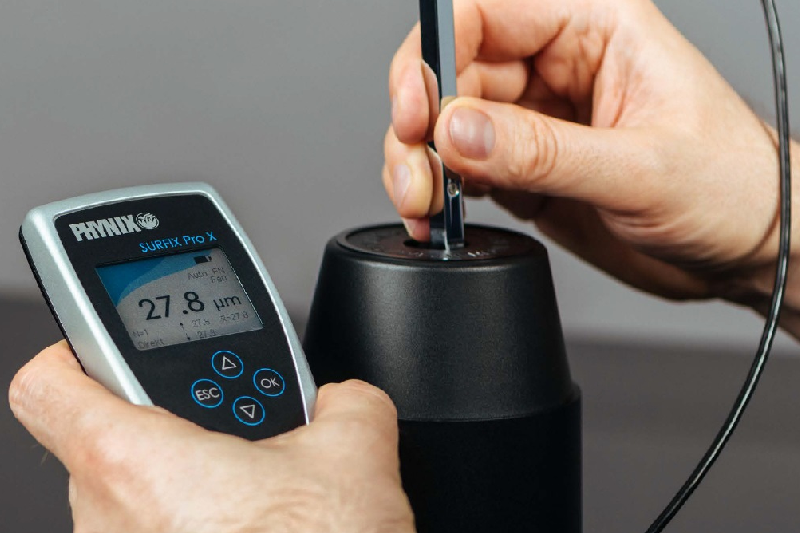
In industrial sectors across India—from automotive manufacturing in Pune and Chennai to heavy fabrication in Gujarat and steel production in Jamshedpur—ensuring the right coating thickness on parts and structures is not just a quality metric but a business necessity. A coating thickness gauge or dft meter plays a vital role in quality assurance, helping companies maintain product durability, comply with international standards, and reduce warranty costs through accurate paint inspection. In this guide, we explain the science behind coating thickness measurement in simple, practical terms for Indian businesses and industries.
Why Coating Thickness Matters in Industry?
Coatings such as paint, powder coatings, galvanising, anodising, and anti-corrosion layers protect components from environmental damage such as rust, moisture, and chemical exposure. The performance and lifespan of a coating depend on how uniformly and accurately it is applied. Too thin and the protection fails; too thick and it increases material cost, can crack, or peel prematurely.
Measuring the coating thickness helps you –
- Ensure compliance with specified quality criteria in contracts and standards.
- Avoid coating failures that can lead to corrosion or product recalls.
- Optimise coating costs in high-volume manufacturing.
- Maintain consistency across production batches.
This is where tools like a thickness gauge paint and dft meter come into play—transforming subjective visual inspections into precise, quantitative data.
What Is Coating Thickness Measurement?
Coating thickness measurement is the process of determining the thickness of a coating layer on a surface. It includes dry film thickness (DFT) of paint, protective layers, galvanic or anodised surfaces. Depending on the material and environment, these measurements are made with non-destructive testing techniques.
In industrial settings, this means quickly identifying whether the applied paint on a steel structure or metal part meets specifications without damaging the component or halting production.
Types of Measurement Techniques
Modern coating thickness measurement relies on different physical principles. The choice of technology depends on the substrate (e.g., steel vs aluminium), the type of coating, and the level of accuracy required.
1. Magnetic Induction Method
Used when measuring non-magnetic coatings (like paint or enamel) on ferrous (magnetic) metals such as steel. A coating thickness gauge generates a magnetic field that interacts with the substrate. The presence and thickness of the non-magnetic coating affect how the field behaves, and this change is converted to a thickness value.
This method is common in automotive and metal fabrication industries where steel parts are painted or powder coated for corrosion resistance.
2. Eddy Current Method
This method is ideal when measuring non-conductive coatings on non-ferrous substrates like aluminium or copper. The thickness gauge paint or dft meter generates a high-frequency current that induces eddy currents in the underlying conductive material. Variations in these currents allow the gauge to calculate coating thickness accurately.
Eddy current measurement is widely used in sectors like aerospace and aluminium extrusion industries, where non-magnetic surfaces are common.
3. Ultrasonic Techniques
For coatings on non-metallic substrates (such as plastic or composite materials), ultrasonic DFT meters send sound waves through the coating and measure the time it takes for echoes to return. This time difference correlates with coating thickness.
This type of measurement may be used in specialised manufacturing, such as electronics or precision plastics fabrication.
Key Tools in Coating Thickness Measurement
Here are the tools most relevant for Indian industries to ensure coating quality –
Coating Thickness Gauge
A primary tool for quality inspectors and QA teams, a coating thickness gauge provides non-destructive measurement of coatings across metal surfaces. Depending on the model, these gauges can automatically detect substrate types and switch between magnetic induction and eddy current measurement modes, giving accurate results on complex production lines.
Thickness Gauge Paint
Thickness gauge paint tools are specifically designed to measure the thickness of paint layers. These instruments are popular in automotive painting workshops, industrial painting lines, and fleet maintenance depots. Modern digital paint thickness gauges offer quick readings and often store measurement data for reporting and traceability.
DFT Meter (Dry Film Thickness Meter)
The dft meter (Dry Film Thickness Meter) measures the thickness of dry coatings after application and curing. In manufacturing environments where paint, powder coating, or galvanising is applied, DFT meters are indispensable for ensuring that every batch meets the specified dry film thickness.
Common models in Indian markets offer automatic ferrous/non-ferrous detection, multi-point calibration, and data storage—making them suitable for both on-site inspection and shop floor quality control.
Best Practices for Indian Industries
To get reliable data from your coating thickness measurement process –
1. Calibrate Regularly
Always calibrate your gauge or dft meter before measurements. Use certified calibration foils or blocks to ensure readings are accurate.
2. Understand Material Combinations
Know whether the substrate is ferrous or non-ferrous. This determines whether magnetic induction or eddy current measurement is appropriate, affecting accuracy.
3. Take Multiple Readings
Take measurements at multiple points across the surface to account for variability in application. Averaging these values gives a more accurate picture of coating uniformity.
4. Document and Standardise
Record results systematically. In industries where standards like ISO, ASTM, or national specifications apply, documented thickness data can support audits and compliance reviews.
For Indian manufacturing and industrial sectors, understanding the science behind coating thickness measurement is critical for product quality, durability, and cost efficiency. A reliable coating thickness gauge, accurate thickness gauge paint, and robust dft meter help businesses deliver products that meet global standards while optimising processes.
Whether you’re in automotive production, heavy fabrication, or quality inspection, investing in the right measurement tools is not a luxury—it’s a strategic value that strengthens your brand reputation and operational excellence.