


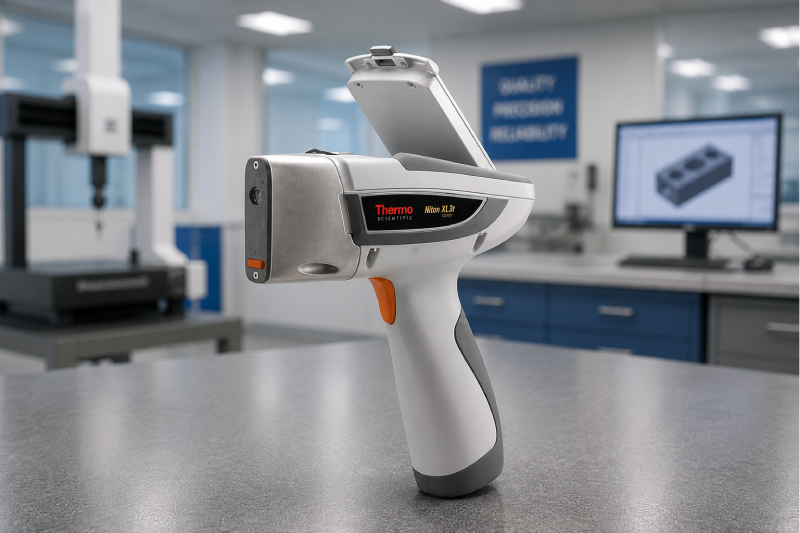
In aerospace manufacturing, there’s zero room for error.
A single material mismatch can lead to costly recalls, compliance failures, or worse—safety risks. Yet many QA teams still rely on slow, lab-based testing or outdated inspection methods that delay production and increase uncertainty.
This is where handheld XRF analyzers are changing the game.
Imagine verifying alloy composition in seconds—right on the shop floor, without destroying the component. In this blog, you’ll discover how these powerful tools are helping aerospace manufacturers improve quality control, reduce risk, and speed up operations.
Table of Contents
- What Are Handheld XRF Analyzers?
- Why Quality Control is Critical in Aerospace
- How Handheld XRF Analyzers Improve QC
- Key Benefits for Aerospace Manufacturers
- Real-World Use Cases
- How to Choose the Right XRF Analyzer
- FAQs
What Are Handheld XRF Analyzers?
Handheld XRF analyzers are portable devices that use x ray fluorescence spectroscopy to instantly identify the elemental composition of metals and alloys.
In simple terms:
They shoot X-rays at a material and measure the emitted fluorescence to determine what elements are present.
This process—known as x ray fluorescence analysis XRF—is:
- Non-destructive
- Fast (results in seconds)
- Highly accurate
For aerospace manufacturers dealing with strict material standards, this is a massive advantage.
Why Quality Control is Critical in Aerospace?
Aerospace components must meet extremely tight tolerances and regulatory standards.
Common challenges include:
- Mixing of similar-looking alloys
- Supplier material inconsistencies
- Compliance with international standards (AMS, ASTM, etc.)
- Time-consuming lab testing delays
Even a minor deviation in material composition can compromise:
- Structural integrity
- Heat resistance
- Corrosion performance
That’s why modern QA teams are moving toward real-time, on-site testing with XRF analyzers.
How Handheld XRF Analyzers Improve Quality Control?
1. Instant Material Verification (PMI Testing)
With handheld XRF analyzers, QC teams can perform Positive Material Identification (PMI) on the spot.
Instead of waiting hours or days:
- Get results in seconds
- Verify incoming raw materials immediately
- Prevent wrong material usage before production starts
This alone can eliminate costly rework and scrap.
2. Non-Destructive Testing Without Downtime
Traditional testing methods often require cutting or damaging samples.
With x ray fluorescence analysis XRF:
- No sample preparation needed
- No damage to expensive aerospace components
- Test finished parts without affecting usability
This keeps production flowing without interruptions.
3. Faster Inspection = Higher Productivity
Time is money—especially in aerospace manufacturing.
Handheld XRF analyzers:
- Reduce inspection time by up to 70%
- Enable in-line testing during production
- Eliminate dependency on external labs
Your QC team becomes faster, more efficient, and more proactive.
4. Improved Compliance & Traceability
Regulatory compliance is non-negotiable in aerospace.
Using XRF analyzers helps:
- Maintain digital records of every test
- Ensure compliance with industry standards
- Provide audit-ready documentation
This builds confidence with clients, auditors, and certification bodies.
5. Reduced Risk of Costly Errors
Material mix-ups can cost lakhs—or even crores.
Handheld XRF analyzers help you:
- Detect alloy mismatches instantly
- Verify supplier materials before acceptance
- Avoid production errors and recalls
One prevented mistake can justify the entire investment.
Key Benefits for Aerospace Manufacturers
Let’s break it down into business impact:
- Faster decision-making on the shop floor
- Lower inspection and operational costs
- Improved product quality and consistency
- Reduced dependency on lab testing
- Enhanced customer trust and compliance
For procurement teams, this means a high ROI investment with measurable returns.
Real-World Use Cases
Here’s how aerospace companies are using handheld XRF analyzers daily:
Incoming Material Inspection
Verify alloy grades of raw materials before they enter production.
In-Process Quality Checks
Ensure correct materials are used at every stage of manufacturing.
MRO (Maintenance, Repair & Overhaul)
Quickly test components during aircraft maintenance without disassembly.
Supplier Quality Audits
Validate material claims from vendors and prevent substandard supplies.
How to Choose the Right Handheld XRF Analyzer?
Not all XRF analyzers are built the same. When evaluating options, consider:
- Accuracy and detection range
- Speed of analysis
- Ease of use for operators
- Data management and reporting features
- Durability for industrial environments
- After-sales support and calibration services
Choosing the right device ensures long-term reliability and performance.
Conclusion
Handheld XRF analyzers empower aerospace manufacturers to:
- Make faster decisions
- Ensure material accuracy
- Maintain strict compliance
- Reduce costly errors
If you’re serious about improving your quality control process, it’s time to upgrade your inspection technology.