


In manufacturing, quality isn’t just about producing a part that looks good—it’s about ensuring that every product performs reliably in the real world. Yet many manufacturers continue to face issues such as premature corrosion, coating failures, customer complaints, product rejections, and costly rework. In many cases, these problems can be traced back to one overlooked factor: incorrect coating thickness.
Whether you’re applying paint, powder coating, galvanization, or protective surface treatments, maintaining the correct coating thickness is critical. Too little coating can expose products to corrosion and wear, while excessive coating can lead to adhesion issues, cracking, and unnecessary material costs.
This is where a coating thickness gauge becomes an essential tool for Manufacturing QA teams. By accurately measuring coating thickness during production and inspection, manufacturers can improve consistency, reduce defects, and ensure compliance with customer specifications and industry standards.
In this guide, we’ll explore how coating thickness measurement helps quality teams enhance product quality and why investing in the right measurement solution delivers long-term value.
Table of Contents
- What Is Coating Thickness Measurement?
- Why Coating Thickness Matters in Manufacturing
- How QA Teams Use a Coating Thickness Gauge
- What Are the Benefits of Coating Thickness Measurement?
- How to Implement Effective Coating Thickness Inspection
- Choosing the Right Coating Thickness Tester
- Conclusion
- FAQs
What Is Coating Thickness Measurement?
Coating thickness measurement is the process of determining the thickness of a protective or decorative coating applied to a substrate. The measurement ensures that the coating meets predefined specifications and performs as intended.
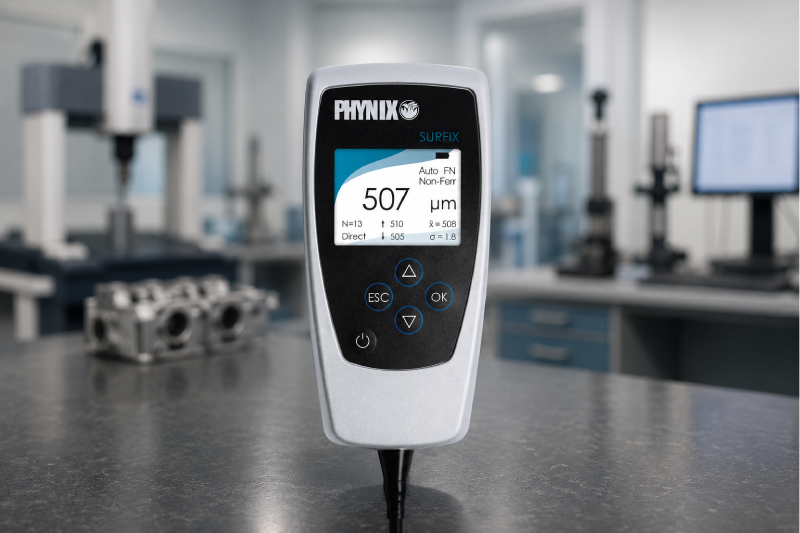
A coating thickness gauge, also known as a DFT meter (Dry Film Thickness Meter), is used to measure the thickness of coatings such as:
- Paint coatings
- Powder coatings
- Galvanized coatings
- Electroplated layers
- Industrial protective coatings
- Anodized surfaces
Modern thickness measurement instruments provide fast, accurate, and non-destructive readings, allowing quality teams to inspect products without damaging them.
Why Does Coating Thickness Matter in Manufacturing?
Many manufacturers focus heavily on dimensions, tolerances, and visual inspections. However, coating thickness plays an equally important role in product performance and lifespan.
Imagine a fabricated steel component designed for outdoor use. If the coating thickness falls below the required specification, moisture can penetrate the protective layer, leading to rust and corrosion much sooner than expected. On the other hand, excessive coating thickness can result in cracking, peeling, or poor adhesion.
Incorrect coating thickness can cause:
- Product failures in the field
- Customer complaints
- Warranty claims
- Rework and scrap
- Increased material costs
- Non-compliance with industry standards
For QA teams, monitoring coating thickness is not just an inspection activity—it is a proactive quality control strategy that directly impacts product reliability and customer satisfaction.
How Manufacturing QA Teams Use a Coating Thickness Gauge
A coating thickness gauge enables quality professionals to verify coating consistency throughout the production process. Instead of relying solely on visual inspections, inspectors obtain measurable and repeatable data.
QA teams typically use coating thickness measurement during:
Incoming Material Inspection
Manufacturers often receive coated components from suppliers. A thickness gauge paint inspection helps verify supplier quality before materials enter production.
In-Process Quality Control
During coating application, inspectors can use a coating thickness tester to ensure the coating is being applied within specification. Early detection prevents large batches of defective products.
Final Product Inspection
Before shipment, quality teams verify that finished products meet customer requirements and industry standards. This final validation minimizes the risk of field failures.
Audit and Compliance Documentation
Many industries require documented quality records. Thickness measurements provide objective data that supports compliance audits and customer quality reports.
What Are the Benefits of Using a Coating Thickness Gauge?
How Does It Reduce Product Defects?
One of the biggest advantages of coating thickness measurement is defect prevention. By detecting deviations early, manufacturers can correct issues before products reach customers.
This leads to:
- Fewer coating failures
- Reduced rework
- Lower scrap rates
- Improved process control
How Does It Improve Product Reliability?
Products exposed to harsh environments require adequate protection against corrosion, chemicals, moisture, and wear.
Accurate coating thickness measurement ensures that protective coatings perform as designed, resulting in longer-lasting products and improved customer confidence.
How Does It Reduce Manufacturing Costs?
Many manufacturers unknowingly waste coating materials by applying thicker layers than necessary.
A DFT meter helps optimize coating application by ensuring the correct amount is applied every time. This reduces material consumption while maintaining quality standards.
Benefits include:
- Lower paint consumption
- Reduced production costs
- Improved process efficiency
- Better resource utilization
How Does It Support Industry Compliance?
Industries such as automotive, aerospace, construction, oil & gas, and heavy engineering often specify strict coating requirements.
Using a reliable coating thickness tester helps manufacturers comply with standards and customer specifications while maintaining traceable quality records.
How Can QA Teams Implement Effective Coating Thickness Inspection?
Successful coating inspection requires more than simply purchasing a measurement device. QA teams should establish a structured inspection process.
Standardize Measurement Procedures
Create documented inspection procedures that define:
- Inspection locations
- Number of measurements
- Acceptance criteria
- Reporting requirements
Standardization improves consistency across operators and facilities.
Train Inspection Personnel
Even the most advanced coating thickness gauge can produce inaccurate results if used incorrectly.
Regular training ensures inspectors understand:
- Proper calibration
- Surface preparation requirements
- Measurement techniques
- Data interpretation
Monitor Trends Instead of Individual Readings
Many quality issues develop gradually over time.
By analyzing thickness measurement trends, QA teams can identify process drift before it results in product failures.
Calibrate Equipment Regularly
Routine calibration ensures measurement accuracy and maintains confidence in inspection data.
Calibration should become a standard part of every quality management system.
How Do You Choose the Right Coating Thickness Tester?
Selecting the right instrument depends on your application, substrate material, and inspection requirements.
When evaluating a coating thickness tester, consider:
Measurement Accuracy
Accurate readings are essential for quality decisions. Look for instruments with proven performance and repeatability.
Ease of Use
Operators should be able to perform inspections quickly and confidently without extensive setup.
Data Storage and Reporting
Modern instruments offer digital reporting capabilities that simplify quality documentation and audit preparation.
Durability
Manufacturing environments can be demanding. Choose equipment designed for industrial use.
Compliance Requirements
Ensure the instrument supports the industry standards relevant to your manufacturing process.
The right thickness gauge becomes more than an inspection tool—it becomes a critical component of your overall quality assurance strategy.
Conclusion
In today’s competitive manufacturing environment, product quality cannot be left to chance. Even small variations in coating thickness can lead to significant quality issues, increased costs, and customer dissatisfaction.
By incorporating a reliable coating thickness gauge into quality control processes, manufacturing QA teams gain the ability to detect problems early, improve consistency, reduce waste, and ensure compliance with customer specifications.
From incoming inspections to final quality verification, coating thickness measurement provides the data-driven insights needed to achieve superior product quality and operational efficiency.
Manufacturers that invest in accurate coating inspection tools are better positioned to reduce failures, strengthen customer trust, and maintain a competitive advantage in the marketplace.
Frequently Asked Questions (FAQs)
What is a coating thickness gauge used for?
A coating thickness gauge is used to measure the thickness of paint, powder coating, galvanization, plating, and other protective coatings without damaging the surface.
What is a DFT meter?
A DFT meter (Dry Film Thickness Meter) measures the thickness of dry coatings applied to metallic and non-metallic substrates.
Why is coating thickness measurement important?
It ensures product quality, corrosion protection, regulatory compliance, and optimal coating performance while reducing defects and material waste.
Can a coating thickness tester reduce manufacturing costs?
Yes. By preventing overcoating and identifying quality issues early, manufacturers can reduce material consumption, rework, and scrap costs.
Which industries use coating thickness gauges?
Automotive, aerospace, metal fabrication, oil & gas, heavy engineering, construction, marine, and industrial coating industries commonly use coating thickness gauges.