


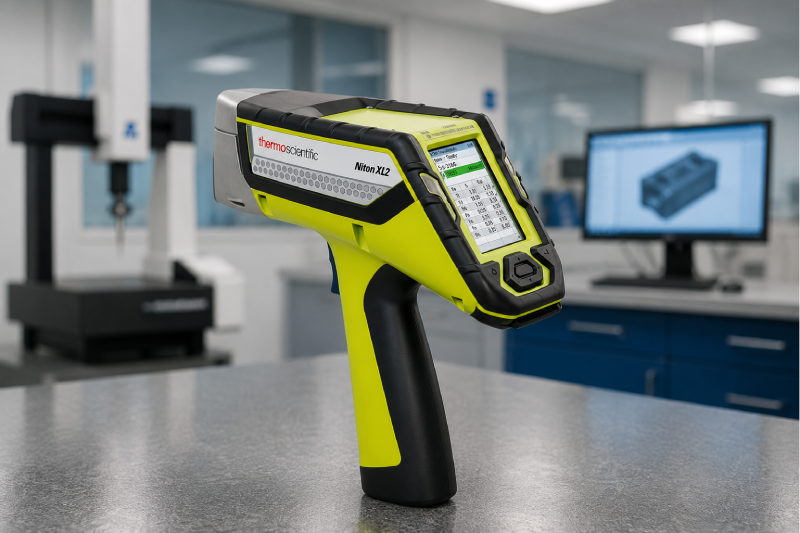
In metal and alloy manufacturing, even a small material identification error can lead to costly consequences. A single batch produced with the wrong alloy composition can result in rejected orders, production delays, customer complaints, compliance issues, and significant financial losses.
For quality managers and production teams, maintaining consistent material quality is no longer just a best practice—it’s a business necessity. Yet many manufacturers still rely on traditional testing methods that are slow, labor-intensive, and often unable to provide immediate results on the shop floor.
This is where handheld XRF analyzers are transforming quality control processes. By providing fast, accurate, and non-destructive material analysis in seconds, these advanced devices help manufacturers identify alloy grades, verify incoming materials, and prevent costly quality failures before they occur.
In this article, we’ll explore how portable XRF technology helps metal manufacturers improve quality assurance, reduce scrap, and strengthen customer confidence.
Table of Contents
- What Causes Quality Failures in Metal Manufacturing?
- What Are Handheld XRF Analyzers?
- How Do Handheld XRF Analyzers Reduce Quality Failures?
- Key Benefits of Portable XRF Analysis
- Industries Using XRF Technology
- Best Practices for Implementation
- Conclusion
- FAQs
What Causes Quality Failures in Metal Manufacturing?
Quality failures often begin long before the final product reaches the customer. In many cases, the root cause can be traced back to incorrect material identification, alloy mix-ups, contamination, or inconsistent raw material quality.
Common quality issues include:
- Wrong alloy grade selection
- Mixing of similar-looking metals
- Supplier material inconsistencies
- Human inspection errors
- Lack of incoming material verification
- Inadequate traceability processes
These issues can lead to:
- Increased scrap rates
- Product recalls
- Rework and production downtime
- Customer dissatisfaction
- Regulatory non-compliance
For manufacturers operating in competitive markets, preventing these failures is essential for profitability and reputation.
What Are Handheld XRF Analyzers?
Handheld XRF analyzers are portable instruments that use X-ray fluorescence technology to identify the elemental composition of metals and alloys within seconds.
An x ray fluorescence analyzer works by directing X-rays onto a material’s surface and measuring the fluorescent energy emitted by the elements present. This allows operators to instantly determine alloy composition without damaging the material.
Unlike traditional laboratory testing, modern xrf analyzers deliver real-time results directly on the production floor, warehouse, or receiving dock.
Today’s advanced xrf machines are widely used for:
- Positive Material Identification (PMI)
- Alloy verification
- Incoming material inspection
- Scrap sorting
- Quality assurance testing
- Supplier validation
How Do Handheld XRF Analyzers Reduce Quality Failures?
1. Verify Incoming Raw Materials Before Production
One of the most common causes of manufacturing defects is the use of incorrect raw materials.
Suppliers may unintentionally deliver materials with the wrong composition, mislabeled batches, or mixed inventory. Without proper verification, these materials can enter production and create widespread quality issues.
Using handheld XRF analyzers, quality teams can inspect every incoming batch within seconds and verify alloy grades before materials are accepted into inventory.
This simple step dramatically reduces the risk of material-related defects.
2. Prevent Alloy Mix-Ups on the Shop Floor
Many alloys appear visually identical despite having significantly different chemical compositions.
For example, certain grades of stainless steel can look nearly identical but perform very differently in critical applications.
A portable x ray fluorescence machine allows operators to quickly verify materials during production, ensuring the correct alloy is used at every stage.
This reduces human error and eliminates costly mix-ups.
3. Improve Positive Material Identification (PMI)
Positive Material Identification has become a critical quality requirement across many industries.
Manufacturers supplying aerospace, automotive, oil & gas, and power generation sectors often need documented proof of material composition.
Modern xrf analyzers provide instant PMI results that support quality documentation and compliance requirements.
This not only reduces quality failures but also strengthens customer trust.
4. Reduce Scrap and Rework Costs
When material issues are discovered after production, the consequences can be expensive.
Manufacturers may need to:
- Scrap finished products
- Rework components
- Delay shipments
- Repeat testing procedures
Portable XRF analysis helps identify material problems before production begins, significantly reducing waste and avoiding unnecessary costs.
For many facilities, the savings generated through scrap reduction alone can justify the investment in an analyzer.
5. Strengthen Supplier Quality Control
Supplier performance directly impacts manufacturing quality.
By incorporating handheld XRF analyzers into supplier verification programs, manufacturers can ensure every shipment meets required specifications.
This proactive approach creates accountability throughout the supply chain and helps maintain consistent product quality.
What Are the Key Benefits of Portable XRF Analysis?
The advantages extend far beyond simple material identification.
Faster Decision-Making
Results are available within seconds, enabling immediate quality decisions without waiting for laboratory reports.
Non-Destructive Testing
Materials remain intact during testing, eliminating unnecessary waste.
Increased Productivity
Operators can perform inspections directly on the production floor, reducing delays and bottlenecks.
Better Compliance
Accurate documentation supports quality certifications and industry standards.
Improved Customer Confidence
Consistent material verification helps manufacturers deliver reliable products every time.
Which Industries Benefit Most from XRF Technology?
Portable XRF technology is widely used across metal and alloy manufacturing sectors.
Industries include:
- Steel manufacturing
- Foundries
- Metal fabrication
- Aerospace manufacturing
- Automotive component production
- Oil & gas equipment manufacturing
- Heavy engineering
- Power generation
- Mining and metallurgy
Even though some businesses may associate an xrf gold testing machine primarily with precious metal analysis, the same technology plays a vital role in industrial alloy verification and quality control.
How Should Manufacturers Implement Handheld XRF Analysis?
To maximize results, manufacturers should integrate XRF testing throughout the production process.
Recommended Best Practices
Verify Incoming Materials
Test all incoming batches before acceptance.
Establish PMI Checkpoints
Perform alloy verification at critical production stages.
Train Operators
Ensure quality teams understand proper testing procedures.
Maintain Calibration
Regular calibration improves accuracy and consistency.
Create Digital Records
Store inspection data for traceability and audits.
When implemented correctly, portable XRF becomes a powerful quality assurance tool rather than just a testing device.
Conclusion
Quality failures can be extremely costly for metal manufacturers, but many of them are preventable.
By using handheld XRF analyzers, manufacturers gain the ability to verify materials instantly, prevent alloy mix-ups, improve supplier quality control, and reduce scrap before problems impact production.
As customer expectations and quality standards continue to rise, portable XRF analysis has become an essential investment for companies looking to improve operational efficiency, protect their reputation, and maintain a competitive edge.
For manufacturers focused on delivering consistent quality and reducing production risks, adopting advanced x ray fluorescence analyzer technology is no longer optional—it’s a strategic advantage.
FAQs
What are handheld XRF analyzers used for?
Handheld XRF analyzers are used for alloy identification, positive material identification (PMI), incoming material inspection, quality control, and scrap metal sorting.
How accurate are XRF analyzers?
Modern XRF analyzers provide highly accurate elemental analysis and can identify alloy grades within seconds when properly calibrated.
Can XRF analyzers detect stainless steel grades?
Yes. XRF technology can accurately identify various stainless steel grades and many other metal alloys.
Are handheld XRF analyzers suitable for manufacturing environments?
Absolutely. These devices are specifically designed for field and shop-floor use, making them ideal for manufacturing facilities.
What is the difference between a laboratory test and portable XRF analysis?
Laboratory testing typically takes longer and requires sample preparation, while portable XRF provides immediate, non-destructive results on-site.