


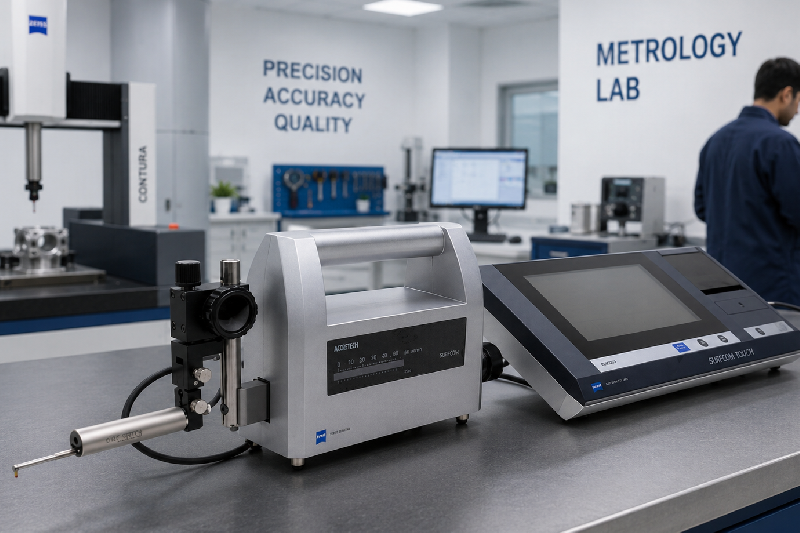
In automotive CNC machining, even the smallest surface imperfection can lead to major performance issues. A poorly finished engine shaft, brake component, or transmission gear may increase friction, reduce durability, and trigger expensive product recalls. That’s why manufacturers today are placing greater focus on precision surface inspection than ever before.
Modern automotive production lines are built around consistency, speed, and micron-level accuracy. But achieving that level of precision is impossible without the right quality control tools. This is where a surface roughness tester becomes essential.
Whether you manufacture engine blocks, crankshafts, gears, pistons, or EV components, a reliable surface roughness measurement instrument helps ensure every machined part meets strict automotive standards. It reduces rework, minimizes defects, improves coating adhesion, and supports long-term product performance.
In this blog, we’ll explore how surface roughness testers improve quality control in automotive CNC machining, why they matter in modern manufacturing, and how choosing the right inspection solution can help manufacturers stay competitive.
Table of Contents
- What Is a Surface Roughness Tester?
- Why Surface Finish Matters in Automotive CNC Machining
- How Surface Roughness Testers Improve Quality Control
- Key Applications in Automotive Manufacturing
- Benefits of Using Portable Surface Roughness Testers
- How to Choose the Right Surface Roughness Measurement Equipment
- Conclusion
- FAQs
What Is a Surface Roughness Tester?
A surface roughness tester is a precision inspection tool used to measure the texture and finish quality of machined surfaces. It evaluates microscopic peaks and valleys on a component’s surface to determine whether it meets required engineering standards.
A modern surface roughness measurement device helps manufacturers analyze critical parameters such as:
- Ra (Average Roughness)
- Rz (Mean Peak-to-Valley Height)
- Rt (Maximum Roughness Depth)
- Rq (Root Mean Square Roughness)
These measurements are vital in automotive manufacturing because surface finish directly affects friction, wear resistance, lubrication performance, sealing capability, and overall component lifespan.
Today’s advanced surface roughness measurement equipment is widely used across CNC machining centers, automotive QA labs, and production lines to ensure precision and consistency.
Why Does Surface Finish Matter in Automotive CNC Machining?
Automotive components operate under high pressure, constant friction, and extreme temperatures. Even minor surface inconsistencies can compromise performance and reliability.
Imagine a transmission gear with excessive surface roughness. The uneven finish increases friction between mating parts, leading to premature wear and reduced fuel efficiency. Similarly, rough engine components can negatively affect lubrication flow and heat distribution.
This is why automotive manufacturers rely heavily on surface roughness testing machines during CNC machining operations.
A controlled surface finish helps:
- Improve component durability
- Reduce friction and wear
- Enhance coating and paint adhesion
- Increase sealing performance
- Minimize vibration and noise
- Ensure compliance with automotive quality standards
For high-volume automotive production, maintaining repeatable surface quality is no longer optional—it’s essential for both safety and profitability.
How Surface Roughness Testers Improve Quality Control in Automotive CNC Machining?
1. Detect Machining Defects Before Final Assembly
One of the biggest advantages of using a surface roughness tester is early defect detection.
CNC machining issues such as tool wear, incorrect cutting speed, vibration, or coolant problems often leave visible surface irregularities. Without proper inspection, these defects may only be discovered after assembly or customer complaints.
Using a surface roughness meter allows QA teams to identify inconsistencies immediately and correct machining parameters before defects escalate into costly production losses.
This proactive approach helps manufacturers:
- Reduce scrap and rework
- Avoid production downtime
- Improve first-pass yield
- Maintain consistent product quality
In large-scale automotive manufacturing, preventing just a few rejected batches can save thousands of dollars.
2. Ensure Consistency Across High-Volume Production
Automotive suppliers often produce thousands of identical components every day. Maintaining identical surface quality across every batch is a major challenge.
A reliable surface roughness measurement instrument helps production teams standardize inspection processes and maintain consistent machining quality across shifts, operators, and machines.
By integrating surface roughness measurement equipment into quality workflows, manufacturers can establish measurable quality benchmarks and reduce variability in production.
Consistency also strengthens supplier credibility with automotive OEMs that demand strict quality compliance.
3. Improve Functional Performance of Automotive Components
Surface finish directly impacts how automotive parts perform in real-world conditions.
For example:
- Smooth bearing surfaces reduce friction
- Properly finished gears improve power transmission
- Refined brake components enhance safety
- Precision engine parts improve fuel efficiency
Using a surface roughness testing machine ensures that every component achieves the required finish quality for optimal functionality.
This becomes even more critical in electric vehicle manufacturing, where precision components require extremely fine surface tolerances for efficient operation.
What Are the Key Applications of Surface Roughness Testers in Automotive Manufacturing?
A portable surface roughness tester is widely used across multiple automotive machining applications, including:ible consumables may reduce fusion efficiency and weaken structural integrity.
Engine Components
- Crankshafts
- Camshafts
- Cylinder heads
- Pistons
Transmission Systems
- Gears
- Shafts
- Bearings
- Clutch components
Brake Systems
- Brake discs
- Brake drums
- Calipers
EV Components
- Battery housings
- Motor shafts
- Precision aluminum components
These applications require highly controlled surface finishes to ensure safety, durability, and performance.
Why Are Portable Surface Roughness Testers Becoming Popular?
Modern manufacturers increasingly prefer a portable roughness tester because it offers flexibility and faster inspection directly on the production floor.
Unlike traditional stationary systems, portable devices allow operators to inspect large or difficult-to-move automotive components without interrupting workflow.
Key Benefits of Portable Surface Roughness Testers
- Faster on-site inspection
- Reduced machine downtime
- Easy operation for production teams
- Improved inspection efficiency
- Suitable for large automotive components
- Real-time quality monitoring
For busy CNC machining environments, portability translates into higher productivity and quicker decision-making.
How to Choose the Right Surface Roughness Measurement Equipment?
Selecting the right surface roughness measurement device depends on your manufacturing requirements, inspection frequency, and component complexity.
Here are a few important factors to consider:
Measurement Accuracy
Choose equipment capable of micron-level precision for automotive applications.
Portability
A portable surface roughness tester is ideal for shop-floor inspection and large components.
Parameter Support
Ensure the device supports critical automotive roughness parameters such as Ra, Rz, and Rt.
Ease of Use
User-friendly interfaces reduce training time and improve inspection speed.
Data Reporting
Advanced systems with digital reporting and data storage simplify quality documentation and audits.
Investing in the right surface roughness measurement equipment not only improves quality control but also strengthens long-term production efficiency.
Conclusion
In modern automotive CNC machining, precision surface inspection plays a critical role in ensuring product quality, durability, and manufacturing efficiency.
A reliable surface roughness tester helps manufacturers detect machining defects early, maintain production consistency, improve component performance, and reduce costly rework. As automotive tolerances continue to tighten—especially in EV manufacturing—the importance of advanced surface finish inspection will only continue to grow.
Whether you are a CNC machining company, automotive supplier, or OEM manufacturer, investing in the right surface roughness measurement instrument can significantly improve your quality control process and strengthen customer confidence.
FAQs
What is a surface roughness tester used for in automotive manufacturing?
A surface roughness tester is used to measure the finish quality of machined automotive components to ensure they meet performance and quality standards.
Why is surface roughness important in CNC machining?
Surface roughness affects friction, wear resistance, sealing performance, coating adhesion, and overall component lifespan.
What industries use surface roughness measurement equipment?
Industries such as automotive, aerospace, semiconductor, medical device manufacturing, and precision engineering widely use surface roughness inspection systems.
What is the advantage of a portable surface roughness tester?
A portable surface roughness tester allows quick on-site inspection, reduces downtime, and improves production efficiency.
How does surface roughness testing reduce production costs?
It helps identify defects early, reducing scrap, rework, warranty claims, and production delays.