


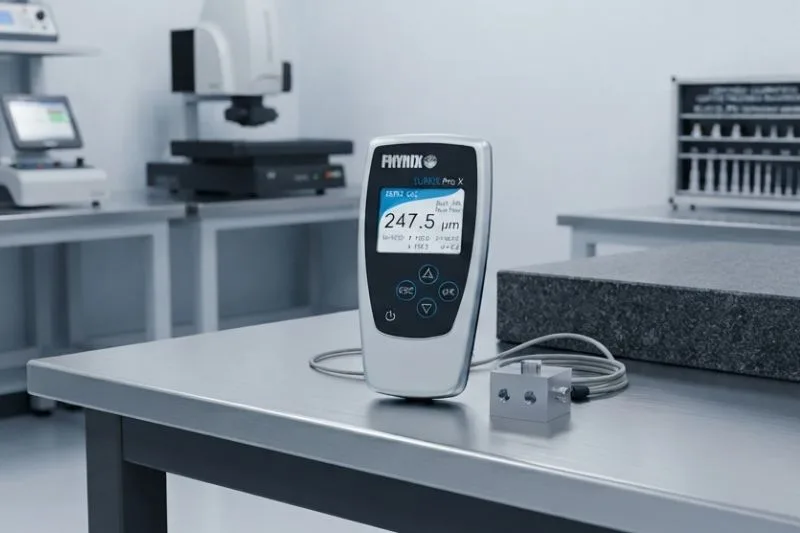
In automotive manufacturing, every micron matters. Whether you’re painting vehicle bodies, applying anti-corrosion coatings, or finishing engine components, even a slight variation in coating thickness can lead to unnecessary material waste, costly rework, rejected parts, and dissatisfied customers.
Imagine a production line where paint consumption keeps increasing, yet quality issues continue to appear. The root cause often isn’t the paint itself—it’s inconsistent coating thickness. Applying coatings thicker than required wastes expensive materials, while thinner coatings compromise corrosion resistance and durability.
This is where coating thickness gauges become an essential quality control tool. By accurately measuring coating thickness at every stage of production, automotive manufacturers can optimize material usage, reduce operational costs, and consistently meet OEM quality standards.
If you’re looking to improve production efficiency while reducing waste, this guide explains exactly how coating thickness measurement delivers measurable results.
Table of Contents
- Why Material Waste Is a Growing Challenge in Automotive Manufacturing
- What Are Coating Thickness Gauges?
- How Do Coating Thickness Gauges Reduce Material Waste?
- Where Are Coating Thickness Gauges Used in Automotive Manufacturing?
- What Should Automotive Manufacturers Look for in a Coating Thickness Gauge?
- Business Benefits Beyond Material Savings
- Conclusion
- Frequently Asked Questions
Why Is Material Waste a Major Concern in Automotive Manufacturing?
Automotive manufacturers operate in an industry where production volumes are high and quality expectations are even higher.
A small increase in coating thickness across thousands of vehicles can result in:
- Higher paint consumption
- Increased powder coating costs
- Longer curing cycles
- Additional labor for rework
- Increased environmental waste
- Reduced production efficiency
For OEMs and Tier-1 suppliers, these inefficiencies directly impact profitability.
What causes coating material waste in automotive production?
The most common causes include:
- Manual coating inconsistencies
- Lack of real-time coating inspection
- Excessive paint application
- Inaccurate process settings
- Poor quality control practices
- No verification after coating application
Without accurate measurement, manufacturers often apply extra coating “just to be safe,” resulting in significant material loss over time.
What Are Coating Thickness Gauges?
Coating thickness gauges are precision instruments used to measure the thickness of paint, powder coating, electroplating, anodizing, galvanizing, and protective coatings applied to metal or non-metal substrates.
These instruments provide fast, accurate, and non-destructive measurements, helping manufacturers verify whether every coated component meets specified thickness requirements.
Depending on the application, manufacturers may also refer to these devices as:
- DFT meter
- Coating thickness tester
- Paint thickness gauge
- Dry film thickness measuring instrument
In automotive manufacturing, these tools help ensure consistent coating quality while minimizing unnecessary material usage.
How Do Coating Thickness Gauges Reduce Material Waste?
1. Prevent Over-Application of Coatings
One of the biggest reasons for excessive material consumption is applying coatings thicker than specified.
For example:
Recommended Thickness | Actual Applied | Result |
70 μm | 95 μm | Extra paint wasted |
80 μm | 120 μm | Higher curing time & material cost |
Using coating thickness gauges, operators immediately know whether the coating falls within the acceptable range.
Instead of guessing, they apply exactly what’s needed.
2. Detect Process Variations Early
Production environments constantly experience changes due to:
- Spray gun settings
- Paint viscosity
- Air pressure
- Robot calibration
- Operator handling
Regular inspections using a coating thickness tester identify these variations before they become large-scale production issues.
This minimizes scrap and prevents thousands of defective components from reaching later production stages.
3. Reduce Rework and Repainting
Every repainting cycle increases:
- Paint consumption
- Labor costs
- Production downtime
- Energy usage
Accurate thickness measurement ensures components meet specifications during the first inspection.
Higher First Pass Yield means less waste and faster production.
4. Optimize Paint Shop Efficiency
Paint is one of the most expensive consumables in automotive manufacturing.
By integrating DFT meter inspections into quality control processes, manufacturers can:
- Optimize spray parameters
- Reduce excessive coating
- Improve transfer efficiency
- Lower paint inventory costs
Even small reductions in paint usage translate into substantial annual savings for high-volume production facilities.
How Does Accurate Coating Thickness Improve Automotive Quality?
Beyond reducing waste, consistent coating thickness directly affects product quality.
Why is coating thickness important in automotive manufacturing?
Proper coating thickness helps:
- Improve corrosion resistance
- Increase component durability
- Enhance paint appearance
- Prevent premature coating failure
- Ensure compliance with OEM specifications
- Extend vehicle lifespan
When coatings are consistently applied within specified tolerances, manufacturers reduce warranty claims while improving customer satisfaction.
Where Are Coating Thickness Gauges Used in Automotive Manufacturing?
These instruments are widely used across automotive production facilities.
Body Shop
- Vehicle body panels
- Doors
- Roof panels
- Bonnets
Paint Shop
- Primer inspection
- Base coat verification
- Clear coat measurement
- Powder coating inspection
Component Manufacturing
- Chassis components
- Suspension parts
- Brake components
- Engine assemblies
Surface Finishing
- Electroplating
- Zinc coating
- Galvanizing
- Protective coatings
Whether producing passenger vehicles, commercial vehicles, or EV components, accurate coating inspection supports consistent manufacturing quality.
What Should Automotive Manufacturers Look for in Coating Thickness Gauges?
Choosing the right measurement solution is equally important.
Consider the following factors before investing.
Feature | Why It Matters |
High Measurement Accuracy | Prevents material overuse |
Fast Inspection Speed | Supports high-volume production |
Non-Destructive Testing | No damage to finished parts |
Easy Data Storage | Simplifies quality documentation |
Multi-Substrate Capability | Measures steel, aluminum, and coated materials |
Durable Industrial Design | Reliable for shop-floor environments |
A high-quality coating thickness tester enables both production teams and quality engineers to make informed decisions quickly.
How Can Coating Thickness Measurement Support Industry 4.0 Manufacturing?
Modern automotive factories rely on data-driven production.
How do coating thickness gauges support smart automotive manufacturing?
Digital coating thickness measurement enables manufacturers to:
- Collect inspection data automatically
- Improve process traceability
- Monitor production trends
- Support predictive maintenance
- Simplify quality audits
- Reduce human error
When integrated into digital quality systems, measurement data becomes a valuable resource for continuous improvement.
Business Benefits Beyond Material Savings
Automotive manufacturers often invest in quality equipment expecting better inspections.
However, accurate coating thickness gauges deliver much more.
Key Business Benefits
- Lower paint and coating consumption
- Reduced production costs
- Fewer rejected components
- Improved process consistency
- Faster quality inspections
- Reduced warranty claims
- Better OEM compliance
- Higher customer satisfaction
- Improved sustainability through lower material waste
These benefits create long-term competitive advantages while supporting lean manufacturing initiatives.
Conclusion
Material waste isn’t always caused by poor production—it often results from poor measurement.
By implementing reliable coating thickness gauges, automotive manufacturers gain precise control over coating applications, reducing paint consumption without compromising product quality.
Whether you’re an Automotive OEM, Tier-1 supplier, or component manufacturer, accurate coating thickness measurement helps improve efficiency, reduce operational costs, and consistently meet demanding industry standards.
Investing in the right inspection equipment today can lead to significant savings, stronger quality performance, and a more sustainable manufacturing process tomorrow.
Frequently Asked Questions (FAQs)
What are coating thickness gauges used for in automotive manufacturing?
Coating thickness gauges measure the thickness of paint, powder coatings, electroplating, and protective coatings to ensure they meet OEM specifications while reducing material waste.
How does a DFT meter reduce paint consumption?
A DFT meter accurately measures dry film thickness, helping operators apply only the required amount of coating and preventing over-application.
What is the difference between a coating thickness tester and a DFT meter?
Both terms are commonly used interchangeably. A coating thickness tester measures coating thickness, while DFT meter specifically refers to measuring dry film thickness after curing.
Can coating thickness gauges improve quality control?
Yes. They help detect coating inconsistencies early, reduce rework, improve corrosion protection, and ensure consistent product quality.
Which automotive components require coating thickness measurement?
Common applications include vehicle body panels, chassis parts, suspension components, brake assemblies, engine parts, powder-coated components, electroplated parts, and EV battery enclosures.