


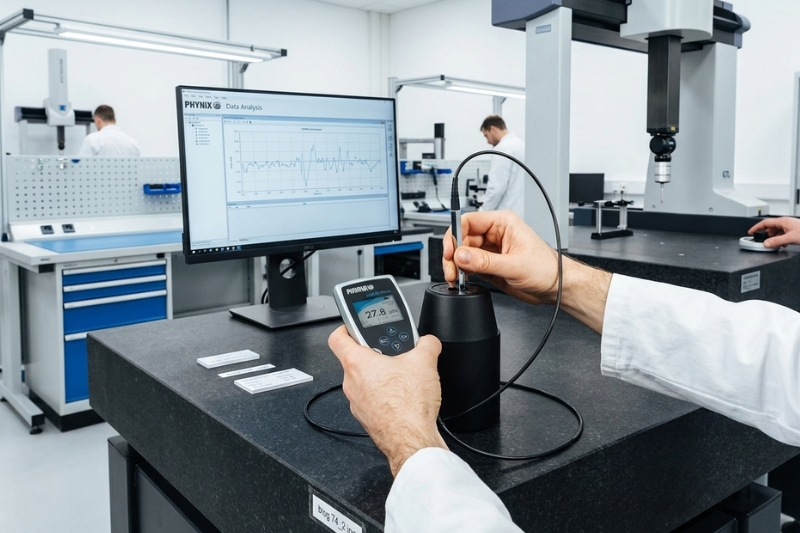
Choosing the right coating thickness gauge is more important than many manufacturers realize. Whether you’re inspecting painted automotive components, powder-coated metal parts, galvanized steel, or protective coatings on industrial equipment, accurate coating thickness measurement directly impacts product quality, durability, and compliance. A coating that is too thin may fail to protect the surface from corrosion, while one that is too thick can lead to cracking, peeling, increased material costs, and production delays. That’s why selecting the right coating thickness gauge isn’t simply about buying a measuring instrument—it’s about investing in consistent quality and long-term performance.
Today’s industries demand precision, traceability, and compliance with international standards. Modern coating thickness gauges provide quick, reliable, and non-destructive measurements that help quality control teams maintain production consistency while reducing costly rework. However, with multiple measurement technologies, features, and specifications available, selecting the right instrument can be confusing.
This guide explains everything you need to know before purchasing a coating thickness gauge, including how they work, the different measurement technologies available, key buying considerations, industry applications, international standards, and expert tips to help you make the right investment.
What Is a Coating Thickness Gauge?
A coating thickness gauge is a precision measuring instrument used to determine the thickness of coatings applied to various substrates. These coatings may include paint, powder coating, electroplating, galvanizing, anodizing, enamel, plastic coatings, and other protective finishes. Depending on the substrate and application, coating thickness gauges use different measurement technologies to provide fast, accurate, and repeatable results without damaging the coated surface.
These instruments play a critical role in industrial quality assurance because they verify whether the applied coating meets the required specifications. Accurate measurements help manufacturers maintain product consistency, improve durability, reduce waste, and comply with international quality standards. In many industries, coating thickness gauges are also referred to as dry film thickness (DFT) meters or coating thickness testers.
Why Accurate Coating Thickness Measurement Matters?
The thickness of a protective coating determines how effectively it performs throughout the product’s life cycle. Even small variations can significantly impact durability and performance.
A coating that is too thin may expose the base material to moisture, chemicals, abrasion, or corrosion. This often results in premature failure, increased maintenance costs, and reduced product life. Conversely, applying excessive coating thickness increases material consumption, production costs, and drying time while potentially causing cracking, blistering, or adhesion problems.
Accurate coating thickness measurement also supports compliance with customer specifications and international standards such as ISO and ASTM. Manufacturers can reduce warranty claims, improve product reliability, and ensure every component meets inspection requirements before shipment.
Types of Coating Thickness Gauges
Different industries require different measurement technologies depending on the substrate material and coating type.
Magnetic Induction Gauges
Magnetic induction gauges measure non-magnetic coatings on ferrous metals such as steel and iron. They are widely used for measuring paint, epoxy coatings, powder coatings, and galvanized layers. This technology offers fast, accurate, and non-destructive measurements, making it ideal for manufacturing, fabrication, and automotive inspection.
Eddy Current Gauges
Eddy current coating thickness gauges are designed for measuring non-conductive coatings on non-ferrous conductive metals, including aluminum, copper, brass, and certain grades of stainless steel. These gauges are commonly used in aerospace, automotive, electronics, and aluminum fabrication industries where lightweight materials require precise coating control.
Ultrasonic Coating Thickness Gauges
Ultrasonic coating thickness gauges use high-frequency sound waves to measure coating thickness on both metallic and non-metallic substrates. Unlike magnetic or eddy current gauges, ultrasonic technology is suitable for plastics, composites, fiberglass, wood, and concrete. It is often used in industries where coatings are applied to materials that cannot be measured using conventional magnetic methods.
Key Factors to Consider Before Buying
Choosing the right coating thickness gauge requires more than comparing prices. Understanding your inspection requirements helps ensure the instrument delivers reliable performance over the long term.
The first factor to consider is the base material. Magnetic induction gauges are ideal for ferrous metals, while eddy current gauges are designed for non-ferrous conductive materials. If your inspection involves plastics, composites, or other non-metallic substrates, ultrasonic technology is generally the better choice.
Next, evaluate the type of coating being measured. Different coatings such as paint, powder coating, anodizing, chrome plating, galvanizing, or thermal spray may require different measurement capabilities. Confirm that the instrument supports the coating and substrate combination used in your production process.
Measurement range is another important consideration. Some applications require only thin coating measurements, while others involve thicker protective layers. Choosing a gauge with an appropriate measuring range ensures accurate readings across all products.
Accuracy and repeatability are equally important. High-precision industries such as aerospace, automotive, semiconductor manufacturing, and medical device production demand extremely accurate measurements. Investing in a high-quality instrument minimizes inspection errors and improves customer confidence.
Surface condition should also be considered. Rough surfaces, curved components, and small parts may require specialized probes or measurement modes to maintain accuracy.
Calibration is another essential aspect. Instruments that support certified calibration standards and quick field calibration help maintain measurement reliability while simplifying quality audits.
Modern coating thickness gauges also include digital features such as memory storage, USB connectivity, Bluetooth communication, statistical analysis, inspection reporting, and software integration. These capabilities improve traceability, simplify documentation, and support Industry 4.0 quality management systems.
Finally, portability matters. Lightweight handheld gauges with long battery life allow inspectors to perform measurements efficiently both in production facilities and on-site installations.
Industry Applications
Coating thickness measurement is essential across numerous industrial sectors.
The automotive industry uses coating thickness gauges to inspect vehicle body panels, painted components, electroplated parts, and corrosion-resistant coatings. Consistent measurements ensure high-quality finishes while protecting vehicles against environmental damage.
In aerospace manufacturing, precise coating thickness helps maintain structural integrity while meeting stringent safety and regulatory requirements. Every protective coating must fall within specified tolerances to ensure long-term performance.
Manufacturing companies rely on coating thickness gauges for quality control during production. From fabricated metal components to industrial machinery, accurate measurements help maintain consistency and reduce rework.
Powder coating manufacturers use these instruments to verify uniform coating thickness before curing. Proper thickness improves appearance, durability, and coating adhesion while minimizing material waste.
Metal fabrication facilities inspect painted steel structures, fabricated assemblies, pipelines, and structural components before delivery. Accurate inspection ensures compliance with project specifications.
Oil and gas facilities depend on coating thickness testing to protect pipelines, pressure vessels, offshore platforms, storage tanks, and processing equipment from corrosion in harsh environments.
Marine industries measure protective coatings on ships, docks, offshore structures, and marine equipment where saltwater exposure accelerates corrosion.
Infrastructure projects involving bridges, transmission towers, railways, and public utilities also require routine coating thickness inspections to maximize service life and reduce maintenance costs.
Coating Thickness Standards You Should Know
International standards provide consistent measurement methods and ensure reliable inspection results.
ISO 2178 specifies magnetic induction measurement techniques for non-magnetic coatings on ferrous substrates. ISO 2360 covers eddy current measurement methods for coatings on non-ferrous metals. ISO 2808 outlines general procedures for coating thickness measurement across various coating systems.
ASTM standards are equally important. ASTM D7091 defines non-destructive measurement methods for dry film thickness, while ASTM D1186 focuses on magnetic gauges used in coating inspection. ASTM D6132 provides guidance for ultrasonic coating thickness measurements.
Selecting an instrument designed to comply with these internationally recognized standards simplifies audits, improves customer confidence, and ensures regulatory compliance.
Common Mistakes When Selecting a Coating Thickness Gauge
One of the most common mistakes is choosing a gauge based solely on price. Lower-cost instruments often lack the accuracy, durability, and calibration support required for industrial inspection.
Another mistake is ignoring the substrate material. A magnetic gauge designed for steel cannot accurately measure coatings on aluminum. Selecting the wrong measurement technology leads to inaccurate readings and poor quality control.
Some buyers also overlook calibration requirements, software compatibility, measurement range, and long-term service support. Considering these factors before purchase reduces future operational challenges.
Tips for Accurate Coating Thickness Measurement
Always calibrate the instrument before inspection using certified reference standards. Ensure the measurement surface is clean and free from contaminants. Take multiple readings across different locations to obtain representative average values rather than relying on a single measurement. Follow the manufacturer’s operating instructions and perform periodic verification to maintain long-term accuracy.
Why Choose QS Metrology for Coating Thickness Gauges
At QS Metrology, we understand that precision measurement is critical for manufacturing excellence. Our range of coating thickness gauges is designed to deliver accurate, reliable, and repeatable results across a wide variety of industrial applications. Whether you require magnetic induction, eddy current, or advanced ultrasonic measurement technology, our experts help you select the most suitable solution based on your production requirements, inspection standards, and quality objectives. Combined with technical support, calibration assistance, and application guidance, QS Metrology ensures you receive more than just an instrument—you gain a trusted inspection partner.
Conclusion
Choosing the right coating thickness gauge is an investment in product quality, operational efficiency, and customer satisfaction. By understanding your application requirements, substrate materials, coating types, accuracy expectations, and compliance obligations, you can select an instrument that delivers reliable performance for years to come. Whether you operate in automotive, aerospace, manufacturing, marine, or oil and gas industries, accurate coating thickness measurement helps prevent failures, reduce costs, and maintain the highest quality standards.
If you’re looking for a reliable coating thickness gauge tailored to your industrial application, explore QS Metrology’s complete range of precision coating thickness measurement solutions. Our technical experts are ready to help you choose the ideal instrument for accurate, standards-compliant, and efficient inspection.
Frequently Asked Questions (FAQs)
What is a coating thickness gauge?
A coating thickness gauge is an instrument used to measure the thickness of protective coatings such as paint, powder coating, galvanizing, anodizing, and plating on various substrates.
How do coating thickness gauges work?
They use magnetic induction, eddy current, or ultrasonic technology to measure coating thickness accurately without damaging the coated surface.
Which coating thickness gauge is best for metal surfaces?
Magnetic induction gauges are ideal for steel, while eddy current gauges are recommended for aluminum and other non-ferrous conductive metals.
What is the difference between magnetic and eddy current coating thickness gauges?
Magnetic gauges work on ferrous metals, whereas eddy current gauges are designed for non-ferrous conductive materials.
Why is coating thickness measurement important?
It ensures corrosion protection, product durability, regulatory compliance, reduced material waste, and consistent manufacturing quality.
How accurate are coating thickness gauges?
Modern industrial-grade instruments provide highly accurate, repeatable measurements when properly calibrated and operated according to international standards.
What standards apply to coating thickness measurement?
Common standards include ISO 2178, ISO 2360, ISO 2808, ASTM D7091, ASTM D1186, and ASTM D6132.
How do I choose the right coating thickness gauge?
Consider the substrate material, coating type, required accuracy, measurement range, calibration support, portability, data management features, and applicable industry standards.