


A flawless paint finish is one of the first things customers notice about a vehicle. But achieving that showroom-quality appearance takes much more than choosing the right paint color. Behind every smooth, durable finish is a carefully controlled paint application process—and one of the most important tools in that process is a coating thickness gauge.
If the paint coating is too thin, it may not provide enough protection against corrosion, moisture, or UV exposure. If it’s too thick, it can lead to peeling, cracking, extended curing times, and unnecessary paint consumption. That’s why automotive manufacturers, paint shops, and quality inspectors rely on coating thickness gauges to ensure every vehicle meets strict quality and performance standards.
In this blog, you’ll learn why paint thickness matters, how a DFT meter improves quality inspection, and why investing in a reliable coating thickness tester helps manufacturers reduce defects, improve consistency, and protect their reputation.
Table of Contents
- What Are Coating Thickness Gauges?
- Why Is Paint Thickness Important in the Automotive Industry?
- How Do Coating Thickness Gauges Work?
- What Problems Can Incorrect Paint Thickness Cause?
- How Does a DFT Meter Improve Quality Control?
- What Should You Look for in a Coating Thickness Tester?
- Why Are Automotive Manufacturers Investing in Paint Thickness Measurement?
- Conclusion
- Frequently Asked Questions
What Are Coating Thickness Gauges?
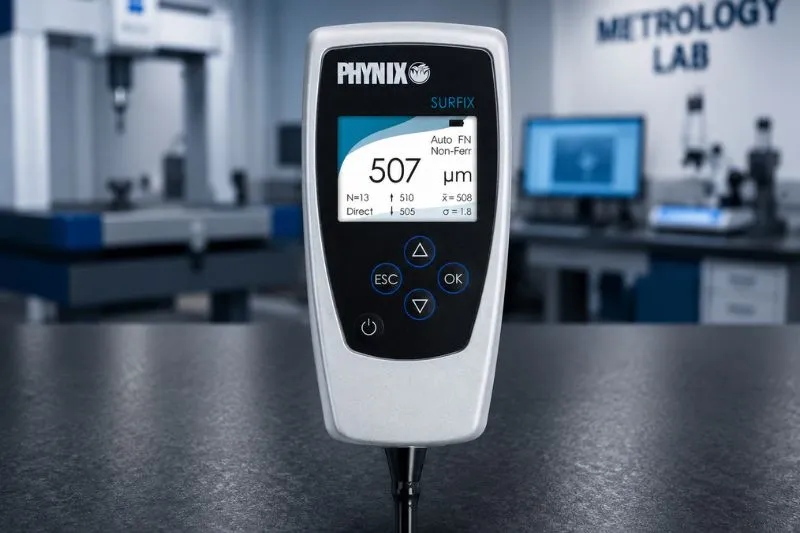
Coating thickness gauges are precision instruments used to measure the thickness of paint, powder coating, plating, or other protective coatings applied to metal surfaces.
In the automotive industry, these gauges help verify that every paint layer meets the manufacturer’s specifications without damaging the surface.
Most modern coating thickness testers provide instant, non-destructive measurements, allowing inspectors to quickly verify coating quality during production, refinishing, or final inspection.
Whether inspecting a new vehicle or checking repaired panels, accurate coating measurement is essential for maintaining consistent quality.
Why Is Paint Thickness So Important in Automotive Manufacturing?
Paint does much more than improve a vehicle’s appearance. It also protects the metal body from corrosion, weather, chemicals, and daily wear.
Maintaining the correct coating thickness helps manufacturers:
- Improve corrosion resistance
- Extend vehicle lifespan
- Deliver a premium paint finish
- Reduce warranty claims
- Meet OEM quality standards
- Ensure consistent color and gloss
- Protect against environmental damage
Even small variations in coating thickness can affect both the appearance and long-term durability of a vehicle.
How Do Coating Thickness Gauges Work?
Modern coating thickness gauges use magnetic induction or eddy current technology to measure the thickness of non-metallic coatings applied to metal substrates.
The inspection process is simple:
- Place the probe on the painted surface.
- The instrument measures the distance between the coating and the metal substrate.
- The reading appears instantly on the display.
- Inspectors compare the results with specified coating requirements.
Because the process is non-destructive, measurements can be performed throughout production without damaging the vehicle.
What Problems Can Incorrect Paint Thickness Cause?
Applying too little or too much paint can create serious quality issues.
Common problems include:
Premature Corrosion
Thin coatings may expose metal surfaces to moisture and rust over time.
Peeling and Delamination
Excessively thick paint layers may fail to bond properly, leading to peeling.
Color and Gloss Variations
Uneven paint thickness can affect the final appearance of the vehicle.
Increased Production Costs
Over-application wastes paint, increases drying time, and raises manufacturing expenses.
Warranty Claims
Paint failures often result in customer complaints and expensive warranty repairs.
Regular inspection using coating thickness gauges helps identify these issues before vehicles leave the production line.
How Does a DFT Meter Improve Automotive Paint Quality?
A DFT meter (Dry Film Thickness meter) measures the thickness of cured paint coatings with exceptional accuracy.
For automotive manufacturers and paint shops, it offers several advantages.
Consistent Paint Quality
Ensure every panel receives the correct amount of coating.
Faster Inspection
Quick measurements keep up with high-volume production environments.
Reduced Material Waste
Accurate application minimizes excessive paint usage.
Improved Process Control
Measurement data helps optimize spray parameters and painting techniques.
Better Compliance
Verify coating thickness against OEM specifications and international quality standards.
By integrating a DFT meter into the inspection process, manufacturers gain greater confidence in the quality of every painted vehicle.
Why Is a Coating Thickness Tester Better Than Visual Inspection?
A vehicle may appear perfectly painted, but visual inspection alone cannot confirm whether the coating meets specification.
A coating thickness tester provides measurable data that eliminates guesswork.
Benefits include:
Accurate Measurements
Detect coating variations that cannot be seen with the naked eye.
Non-Destructive Testing
Inspect painted surfaces without scratching or damaging the finish.
Repeatable Results
Consistent measurements improve inspection reliability across multiple operators.
Digital Documentation
Generate reports for quality records, customer requirements, and audits.
Faster Decision-Making
Identify production issues immediately, reducing costly rework.
This combination of speed and accuracy makes coating thickness measurement an essential part of modern automotive quality control.
What Should You Consider Before Choosing Coating Thickness Gauges?
Not every application requires the same inspection solution. Choosing the right equipment depends on your production environment and coating requirements.
Consider the following features:
Measurement Accuracy
High precision ensures reliable inspection results.
Multi-Substrate Capability
Select a gauge that measures coatings on both ferrous and non-ferrous metals.
Fast Response Time
Rapid measurements improve productivity in high-volume manufacturing.
Data Storage and Reporting
Built-in memory and reporting simplify quality documentation.
User-Friendly Operation
Easy-to-use interfaces reduce training time and improve efficiency.
Rugged Construction
Durable instruments perform reliably in demanding production environments.
Selecting the right coating thickness gauges helps improve both inspection efficiency and long-term manufacturing quality.
Why Are Automotive Manufacturers Investing in Advanced Paint Thickness Measurement?
As customer expectations rise and quality standards become more demanding, manufacturers are investing in smarter inspection technologies.
Leading automotive OEMs and paint shops use coating thickness gauges, DFT meters, and coating thickness testers to:
- Improve first-pass quality
- Reduce paint defects
- Lower material costs
- Minimize rework
- Ensure compliance with OEM standards
- Strengthen customer confidence
- Increase production efficiency
These benefits not only improve product quality but also contribute to better profitability and a stronger brand reputation.
Conclusion
A high-quality automotive paint finish is about more than appearance—it protects the vehicle, enhances durability, and reflects the manufacturer’s commitment to quality.
By using reliable coating thickness gauges, manufacturers and paint professionals can verify coating consistency, reduce production defects, and ensure every vehicle meets strict performance standards. Whether you’re managing an automotive paint shop, working in vehicle manufacturing, or overseeing quality inspections, investing in a high-performance DFT meter or coating thickness tester is a smart decision that delivers long-term value.
Frequently Asked Questions (FAQs)
What are coating thickness gauges?
Coating thickness gauges are precision instruments used to measure the thickness of paint, powder coatings, and other protective coatings without damaging the surface.
Why is paint thickness important in automotive manufacturing?
Proper paint thickness protects vehicles from corrosion, improves appearance, enhances durability, and ensures compliance with manufacturer specifications.
What is a DFT meter?
A DFT meter (Dry Film Thickness meter) measures the thickness of cured coatings to verify that paint applications meet required standards.
How does a coating thickness tester work?
A coating thickness tester uses magnetic induction or eddy current technology to measure the distance between the coating and the metal substrate, providing fast and accurate non-destructive readings.
Which industries use coating thickness gauges?
These instruments are widely used in automotive manufacturing, automotive refinishing, aerospace, marine, industrial coating, powder coating, and metal fabrication industries.