


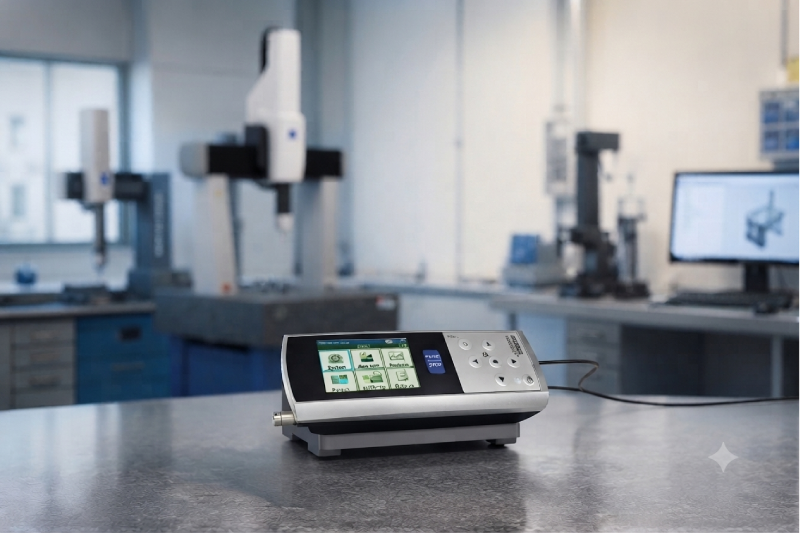
The Hidden Factor Behind Performance Failures
If you’ve ever dealt with premature bearing failure, noisy gears, or inconsistent performance, you already know this—surface finish is everything.
In bearing and gear manufacturing, even a slight variation in surface roughness can lead to friction, wear, vibration, and costly rejections. Yet many manufacturers still rely on outdated or mismatched surface roughness tester solutions that don’t align with modern production demands.
So how do you choose the right tool?
This guide will help you cut through the confusion and select the best surface roughness measuring instruments for your application—so you can improve quality, reduce defects, and make confident buying decisions.
Table of Contents
- Why Surface Roughness Matters in Bearings & Gears
- What is a Surface Roughness Tester?
- Key Factors to Consider Before Buying
- Portable vs Bench-Top Testers: Which One Fits Your Shop Floor?
- Critical Parameters (Ra, Rz & More) You Should Measure
- Common Mistakes to Avoid
- How the Right Equipment Impacts ROI
- FAQs
Why Surface Roughness Matters in Bearing & Gear Manufacturing?
In industries like automotive and industrial machinery, performance expectations are unforgiving. Bearings and gears operate under high loads, speeds, and continuous friction. This is where surface roughness becomes a make-or-break factor.
A smoother, well-controlled surface:
- Reduces friction and heat generation
- Enhances lubrication retention
- Extends component lifespan
- Minimizes noise and vibration
On the flip side, poor surface finish can lead to:
- Early wear and tear
- Increased maintenance costs
- Product rejection and customer dissatisfaction
That’s why leading manufacturers don’t treat roughness as a “final inspection task”—they treat it as a critical quality parameter throughout production.
What is a Surface Roughness Tester?
A surface roughness tester is a precision device used to measure the texture of a surface. It quantifies irregularities using parameters like Ra (average roughness), Rz, and more.
Modern surface roughness measurement equipment goes beyond basic readings. It provides:
- Digital profiling
- Data storage and analysis
- Real-time quality monitoring
For bearing raceways and gear tooth profiles, this level of precision ensures consistent performance across batches—which is exactly what OEMs and global clients demand.
Key Factors to Consider Before Buying a Surface Roughness Tester
Choosing the right ra tester isn’t just about specs—it’s about aligning the tool with your production reality.
1. Measurement Accuracy & Resolution
In bearing and gear manufacturing, tolerances are extremely tight. Even micron-level deviations matter.
Look for instruments that offer:
- High resolution (sub-micron accuracy)
- Repeatable measurements
- Stable performance in shop-floor conditions
Because inconsistent readings can be worse than no readings at all.
2. Application Compatibility
Not all surface roughness measuring instruments are designed for complex geometries like:
- Gear tooth flanks
- Bearing raceways
- Small precision components
Make sure the tester supports:
- Curved and cylindrical surfaces
- Hard-to-reach areas
- Different materials and finishes
3. Portability vs Fixed Setup
Your workflow matters.
Portable testers are ideal if:
- You need on-site inspection
- Operators check parts during production
- Flexibility is required across machines
Bench-top systems are better if:
- You require ultra-high precision
- Inspection is done in a controlled lab
- Detailed analysis and reporting are critical
Many modern manufacturers use a combination of both for maximum efficiency.
4. Parameters & Standards Support
A good surface roughness measurement equipment should support multiple parameters like:
- Ra (average roughness)
- Rz (mean roughness depth)
- Rt, Rq, and more
Also ensure compliance with:
- ISO standards
- Industry-specific requirements
This is crucial if you’re supplying to automotive OEMs or exporting globally.
5. Ease of Use & Data Management
Your team should be able to use the device without extensive training.
Look for:
- Intuitive interface
- Quick setup and calibration
- Data storage and export options
Because in real production environments, speed and usability directly impact productivity.
Portable vs Bench-Top Testers: Which One is Right for You?
This is one of the most common buying dilemmas.
Portable Surface Roughness Tester
Best for:
- Shop-floor inspections
- Quick quality checks
- Reducing downtime
Advantages:
- Lightweight and easy to use
- Immediate results
- Ideal for production environments
Bench-Top Surface Roughness Tester
Best for:
- Final inspection
- R&D and quality labs
- High-precision requirements
Advantages:
- Superior accuracy
- Advanced analysis features
- Better for documentation and audits
Pro Tip: If you’re scaling production, investing in both can create a closed-loop quality system—inspection during and after production.
Critical Parameters You Should Never Ignore (Ra, Rz & More)
When selecting a ra tester, understanding parameters is key.
Most Important Parameters:
- Ra (Average Roughness):
The most commonly used parameter. It gives a general idea of surface finish. - Rz (Mean Roughness Depth):
Highlights peak-to-valley variations—important for load-bearing surfaces. - Rt (Total Height):
Useful for identifying extreme surface deviations.
For bearings and gears:
- Ra ensures smooth operation
- Rz ensures durability under load
Ignoring these can result in components that look fine—but fail under real-world conditions.
Common Mistakes Buyers Make (And How to Avoid Them)
Even experienced professionals sometimes choose the wrong equipment. Here’s what to watch out for:
- Buying Based on Price Alone: Low-cost devices often lack accuracy and durability.
- Ignoring Application Needs: Not all testers work well on gears or bearing surfaces.
- Overlooking Calibration & Support: Without proper service, even the best device becomes unreliable.
- Choosing Complex Systems: If your team can’t use it efficiently, it slows down production.
The right approach?
Focus on long-term value, reliability, and application fit.
How the Right Surface Roughness Tester Impacts ROI?
This isn’t just a quality investment—it’s a business decision.
The right surface roughness measuring instruments can help you:
- Reduce rejection rates
- Improve product consistency
- Minimize downtime
- Strengthen client trust
For many manufacturers, this translates into:
- Higher profitability
- Stronger OEM relationships
- Competitive advantage in global markets
Conclusion: Make the Smart Choice, Not the Quick One
Choosing the right surface roughness tester for bearing and gear manufacturing isn’t about ticking boxes—it’s about ensuring performance, reliability, and long-term success.
When your measurement is accurate, your production becomes predictable. And when your production is predictable, your business scales faster.