


The Hidden Cost of Rejection in CNC Machining
That’s where a contour machine becomes a game-changer.
In this blog, we’ll break down how a contour measurement machine helps you reduce rejection rates, improve accuracy, and boost operational efficiency in CNC machining environments.
Table of Contents
- Why Rejection Rates Are High in CNC Machining
- What is a Contour Machine?
- How Contour Machines Reduce Rejection Rates
- Key Benefits for CNC Manufacturers
- Real-World Use Cases
- Tips to Maximize ROI from Contour Measurement
- Conclusion + CTA
- FAQs
Why Are Rejection Rates So High in CNC Machining?
Even with advanced CNC machines, rejection rates often creep in due to:
- Profile inaccuracies (curves, radii, angles not matching design)
- Tool wear and tear affecting precision
- Manual inspection limitations
- Inconsistent measurement methods
- Tight tolerance requirements in industries like automotive and aerospace
Here’s the reality: traditional inspection tools struggle when it comes to complex contours and geometries. You may measure dimensions correctly, but miss profile deviations — and that’s where rejection begins.
What is a Contour Machine?
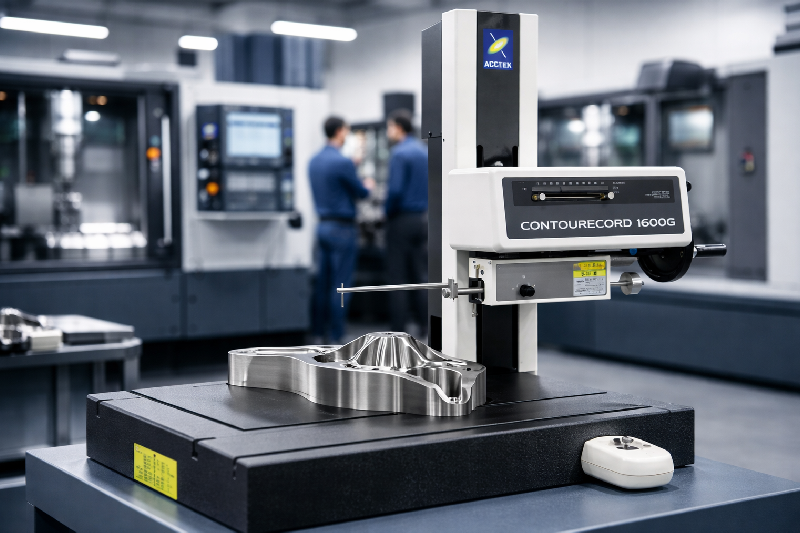
A contour machine, also known as a contour measuring instrument or contour tester, is a precision device used to measure the profile, shape, radius, angle, and surface features of a component.
Key Capabilities:
- High-precision profile measurement
- Radius and angle detection
- 2D contour analysis
- Comparison with CAD data
- Automated measurement and reporting
How Contour Machines Help Reduce Rejection Rates in CNC Machining?
1. Detect Profile Deviations Early
One of the biggest reasons for rejection is undetected profile errors. A contour measurement machine identifies even the smallest deviation in curves, edges, and radii — long before the part reaches final inspection.
This allows your team to:
- Catch errors at the first stage
- Prevent batch-level rejection
- Reduce costly rework
2. Improve Measurement Accuracy and Consistency
Manual inspection often leads to variability. Two operators might measure the same part and get slightly different results.
A contour tester eliminates this inconsistency by providing:
- Automated measurement processes
- Repeatable and reliable results
- Reduced human dependency
This consistency directly leads to fewer false approvals and fewer rejections.
3. Enable Real-Time Process Correction
Imagine this: your contour machining process starts drifting due to tool wear. Without precise measurement, you’ll only notice it after multiple defective parts are produced.
With a contour machine:
- Deviations are detected in real-time
- Operators can adjust CNC parameters immediately
- Production stays within tolerance limits
This proactive approach significantly reduces scrap.
4. Handle Complex Geometries with Ease
Modern CNC components are no longer simple. They involve:
- Complex curves
- Multi-radius profiles
- Intricate edges
Traditional tools struggle here. A contour measuring instrument is specifically designed to handle complex geometries, ensuring every detail is inspected accurately.
5. Reduce Dependency on Multiple Instruments
Without a contour machine, you may rely on:
- Vernier calipers
- Micrometers
- Profile projectors
This not only slows down inspection but also increases the chances of error.
A contour machine consolidates multiple measurements into one system, improving efficiency and accuracy at the same time.
Key Benefits for CNC Manufacturers
Let’s translate features into real business impact:
Reduced Scrap and Rework Costs
By catching defects early, you avoid producing large batches of defective parts.
Improved Product Quality
Consistent contour measurement ensures every part meets design specifications.
Faster Inspection Process
Automated measurement reduces inspection time significantly.
Better Customer Satisfaction
Fewer rejections = fewer complaints = stronger client relationships.
Higher ROI on Production
Less waste and more efficiency directly improve profitability.
Real-World Use Cases in CNC Machining
Automotive Components
Contour machines are used to measure:
- Camshaft profiles
- Gear contours
- Engine components
Even a slight deviation can impact performance — making contour measurement critical.
Aerospace Parts
In aerospace, tolerance is extremely tight. Contour testers help ensure:
- Blade profiles
- Structural components
- Precision fittings
meet exact specifications.
Tool & Die Manufacturing
Contour measurement ensures:
- Perfect mold profiles
- Accurate die shapes
- Consistent production quality
Tips to Maximize ROI from a Contour Machine
Investing in a contour measurement machine is just the first step. To get the most out of it:
Integrate with CNC Workflow
Use contour data to adjust machining parameters in real-time.
Train Your Team
Ensure operators understand how to interpret contour reports effectively.
Use CAD Comparison Features
Compare actual measurements with CAD models for precise validation.
Schedule Preventive Maintenance
Keep the machine calibrated for consistent accuracy.
Conclusion: Stop Rejections Before They Start
Rejection in CNC machining isn’t just a quality issue — it’s a profitability issue.
A contour machine gives you the power to:
- Detect errors early
- Improve measurement accuracy
- Maintain consistent quality
- Reduce waste and rework
If you’re serious about reducing rejection rates and improving production efficiency, investing in the right contour measuring instrument is no longer optional — it’s essential.