


QS Metrology | Portable XRF Analyser | Portable XRF Spectrometer | Optical Emission spectrometer | XRD | Surface roughness Tester | roughness measuring machine | Portable Roughness Tester | Contour measuring machine | Contour Tester | Coordinate measuring machine | 3 D Coordinate measuring machine | Weld penetration inspection | Weld penetration measurement System | Stereomicroscope | Coating thickness tester | Video Measuring machine | Metallurgical Image analysis | Metallurgical microscope

Role of Coating Thickness Gauges in Automotive Paint Shops & Surface Finishing Units

Role of Coating Thickness Gauges in Automotive Paint Shops & Surface Finishing Units
In an automotive paint shop, even a tiny mistake in coating thickness can turn into a big problem—rust complaints, failed audits, or rejected batches. If you’ve ever dealt with inconsistent finishes or customer returns, you already know how frustrating (and expensive) that can be.

This is exactly where a coating thickness gauge becomes more than just a tool—it becomes your quality safeguard.

Whether you’re a QA manager trying to meet OEM standards, a production head aiming to reduce rework, or a paint shop supervisor handling daily output pressure, the right measurement approach can change everything.

In this blog, we’ll break down how coating thickness gauges (including DFT meters, thickness gauge paint tools, and coating thickness testers) play a critical role in automotive paint shops—and how they directly impact quality, cost, and efficiency.

Table of Contents

  • Why Coating Thickness Matters in Automotive Industry
  • What is a Coating Thickness Gauge?
  • Role of Thickness Gauges in Paint Shops & Surface Finishing
  • Common Challenges Without Proper Measurement
  • Key Benefits for Automotive Manufacturers
  • Practical Applications in Automotive Units
  • How to Choose the Right Coating Thickness Tester
  • Conclusion
  • FAQs

Why Coating Thickness Matters in Automotive Industry?

Let’s keep it simple—coating is not just about looks.

In automotive manufacturing, coating ensures:

  • Corrosion resistance
  • Surface durability
  • Compliance with OEM standards
  • Long-term product performance

Now imagine this:

  • Too thin coating = Rust, warranty claims, failed inspections
    Too thick coating = Wastage, cracks, peeling, longer curing time

That’s a direct hit on both quality and profitability.

Most automotive plants today cannot afford trial-and-error. That’s why precision tools like a coating thickness gauge or DFT meter are no longer optional—they’re essential.

What is a Coating Thickness Gauge?

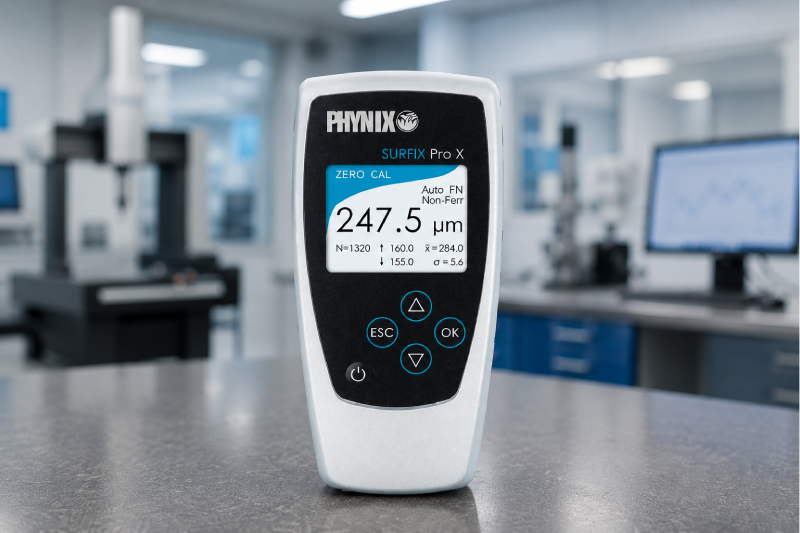
A coating thickness gauge is a device used to measure the thickness of paint, plating, or coating applied to a surface.

It gives you accurate, real-time readings without damaging the component.

Common types used in automotive:

  • DFT Meter (Dry Film Thickness Meter) – Measures dry coating thickness
  • Magnetic Thickness Gauge – For ferrous substrates
  • Eddy Current Gauge – For non-ferrous materials
  • Coating Thickness Tester (Advanced Digital Models) – High-precision, multi-material compatibility

In simple terms, it tells you: “Is your coating within the required micron range or not?”

And that’s critical when you’re dealing with OEM audits and large-scale production.

Role of Coating Thickness Gauge in Automotive Paint Shops

In a busy paint shop, speed is everything. But speed without accuracy leads to defects.

This is where a thickness gauge paint tool becomes your frontline quality checker.

Here’s how it helps on the shop floor:

1. Real-Time Quality Control

Operators can instantly measure coating thickness during or after application. This reduces dependency on lab testing and speeds up decision-making.

2. Process Standardization

With consistent readings from a coating thickness tester, teams can maintain uniform coating across batches—critical for large production volumes.

3. Reduced Rework and Rejection

Instead of discovering defects at the final inspection stage, issues are caught early. That means less scrap and fewer customer complaints.

4. Audit Readiness

When auditors ask for coating data, you’re not guessing—you have accurate records backed by reliable measurement tools.

Common Challenges Without Proper Measurement

If you’re not using a reliable coating thickness gauge, chances are you’ve faced at least one of these:

  • Inconsistent coating across components
  • Frequent rejection from OEMs
  • High material wastage due to overcoating
  • Manual inspection errors
  • Lack of data for process improvement

These issues don’t just affect quality—they affect your brand reputation and profitability.

And in today’s competitive automotive market, that’s a risk you can’t afford.

Key Benefits for Automotive Manufacturers

Let’s talk about real outcomes—what you actually gain by using a DFT meter or coating thickness tester.

Better Product Quality

Uniform coating improves durability and customer satisfaction.

Cost Savings

Avoid overuse of paint and reduce wastage.

Faster Production Cycles

Quick measurements mean fewer delays and smoother workflows.

Compliance with OEM Standards

Meet strict automotive specifications without stress.

Data-Driven Improvements

Modern thickness gauges provide insights that help optimize processes over time.

Practical Applications in Automotive Surface Finishing Units

Coating thickness measurement is used across multiple automotive processes.

Automotive Body Panels

Ensures even paint distribution and premium finish quality.

Fasteners & Small Components

Maintains corrosion resistance through proper plating thickness.

Engine & Transmission Parts

Critical for durability and performance under extreme conditions.

EV Components

High precision required for safety and longevity.

Electroplating Units

Measures layers like zinc, nickel, and chrome accurately.

In each of these cases, a thickness gauge paint solution ensures that quality is not left to chance.

How to Choose the Right Coating Thickness Tester?

Not all gauges are the same—and choosing the wrong one can create more problems than solutions.

Here’s what you should look for:

Accuracy & Repeatability

Your readings should be consistent across multiple measurements.

Material Compatibility

Ensure the gauge works on both ferrous and non-ferrous substrates.

Ease of Use

Operators should be able to use it without complex training.

Data Storage & Reporting

Look for digital models that store readings for audits and analysis.

Calibration Support

Regular calibration ensures long-term reliability.

Pro Tip for Buyers

If you’re evaluating a coating thickness gauge for automotive applications, don’t just compare price.

Ask:

  • Can it handle your production volume?
  • Does it meet OEM compliance requirements?
  • Is after-sales support reliable?

Because in the long run, accuracy saves more money than a cheaper device ever will.

Conclusion

In automotive paint shops and surface finishing units, quality is built layer by layer—literally.

A reliable coating thickness gauge, whether it’s a DFT meter, coating thickness tester, or thickness gauge paint solution, ensures that every layer meets the required standard.

For QA professionals, production heads, and plant managers, this isn’t just about inspection—it’s about control, consistency, and confidence.
If you want to reduce defects, improve efficiency, and stay ahead of OEM expectations, investing in the right measurement tools is the way forward.

FAQs

What is a coating thickness gauge used for?
A coating thickness gauge measures the thickness of paint or coating on a surface to ensure it meets required standards.
A DFT meter (Dry Film Thickness meter) measures the thickness of dried coating layers.
It ensures corrosion resistance, durability, and compliance with OEM specifications.
Different gauges are designed for ferrous and non-ferrous materials, so choosing the right one is important.
Regular calibration is recommended to maintain accuracy, depending on usage frequency.
Scroll to Top